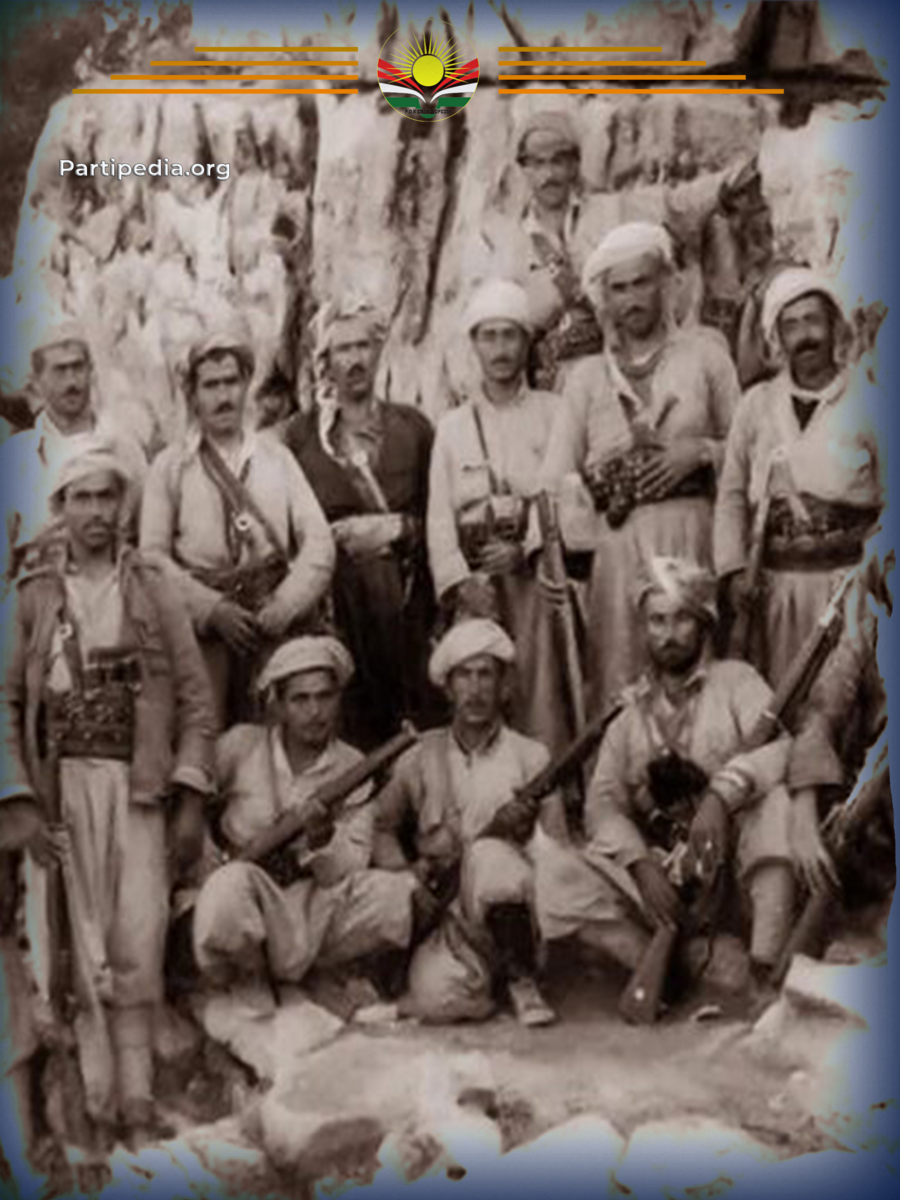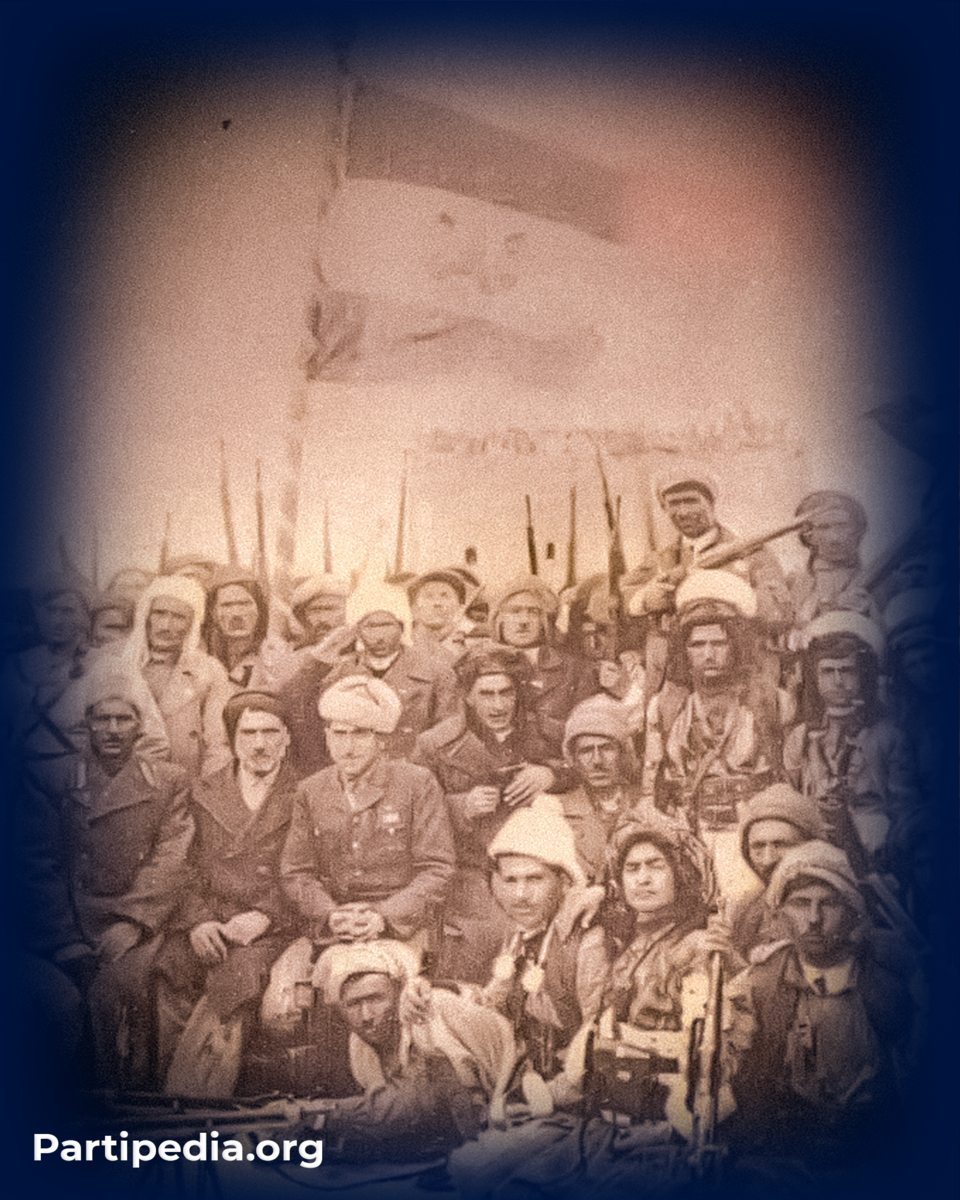



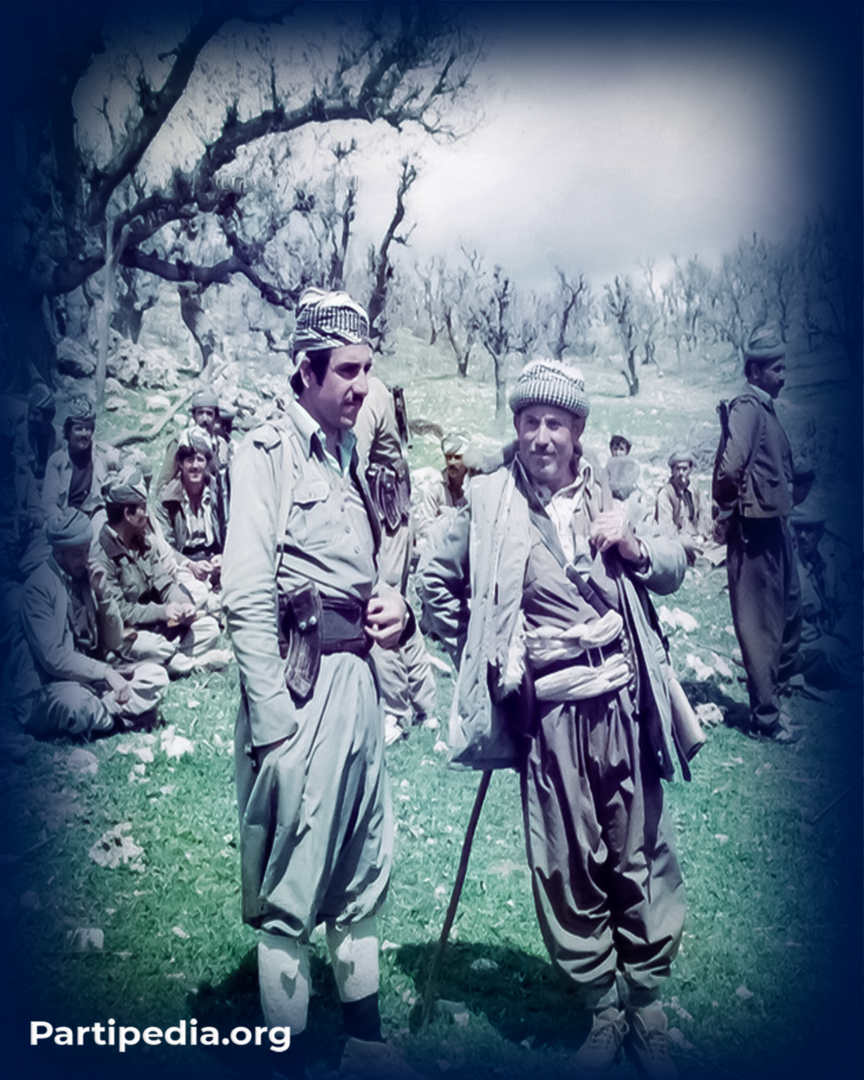
In 1987, the scope of the Peshmerga's activities and campaigns was so wide against the bases, headquarters, and all places that were under the control of the Iraqi forces and where they had established military positions throughout most of southern Kurdistan, to the point that the Peshmerga put the Iraqi government's military apparatus on high alert.(1)Although the army, mercenary militias, and all Iraqi forces attacked Peshmerga-controlled areas at different times and places, the government's military campaigns had little impact on disrupting Peshmerga activities, which continued to increase day by day.(2).
For this purpose, in 1987 a meeting was held for Peshmerga officials at the headquarters of the first branch of the Kurdistan Democratic Party in Komata in the Badinan region. At this meeting, a Peshmerga force was formed, under the supervision of Colonel Muhammad and his deputy, Zewi, along with other officials in the Peshmerga units, with the aim of striking the military forces by attacking the headquarters, outposts, and positions of the soldiers. After the Peshmerga forces moved to the limits of their activity, discussions and exchanges took place regarding the operation and the determination of the location. This time, one of the outposts of the Iraqi army was identified opposite the town of Shiladze on the Ava Zi (on the Great Zab River).(3)It is clear that the military checkpoints established by the government in these areas were intended to control the region and prevent the movement of the Peshmerga.
The Peshmerga forces devised a plan to carry out their assigned mission. The zero hour was set, and the night designated for the attack on the military checkpoint was executed at the appointed time and place. When the raid commenced, they were able to seize the outpost in a short time, killing all the soldiers on duty and confiscating all their weapons, including Kalashnikov rifles. After completing the mission, the Peshmerga force returned to their branch headquarters in Komata without any losses..
It is worth noting that all these activities carried out by the Peshmerga forces served as a message to the Baathist authorities that the Kurdish revolution would not give up on achieving its democratic rights, for which it has been struggling and sacrificing for years.
Sources:
1- Mahsoud Barzani, Barzani and his wife, Ezgari Khwazi Kurd, Barghi Chovarim, 1975-1990, Shichshi Gohan, Bahish Dovim, Chapi. Yahkihm, (Khoksana Chapkhana - 2021 - LL. 65-87).
2- Shamal Zebari, India’s website, Shesha Golanida, Shabi Yahkam, (Chapter 2017) - Hauler – 2015- LL 354-374).
3- Muhammad Murad, Khabata Chia, Perhatan and Serhatian Shisha Golany Danapra Sa5in (1976-1989) Da, (Chaphana Kurdistan - Zakh - 2007, no. 117).