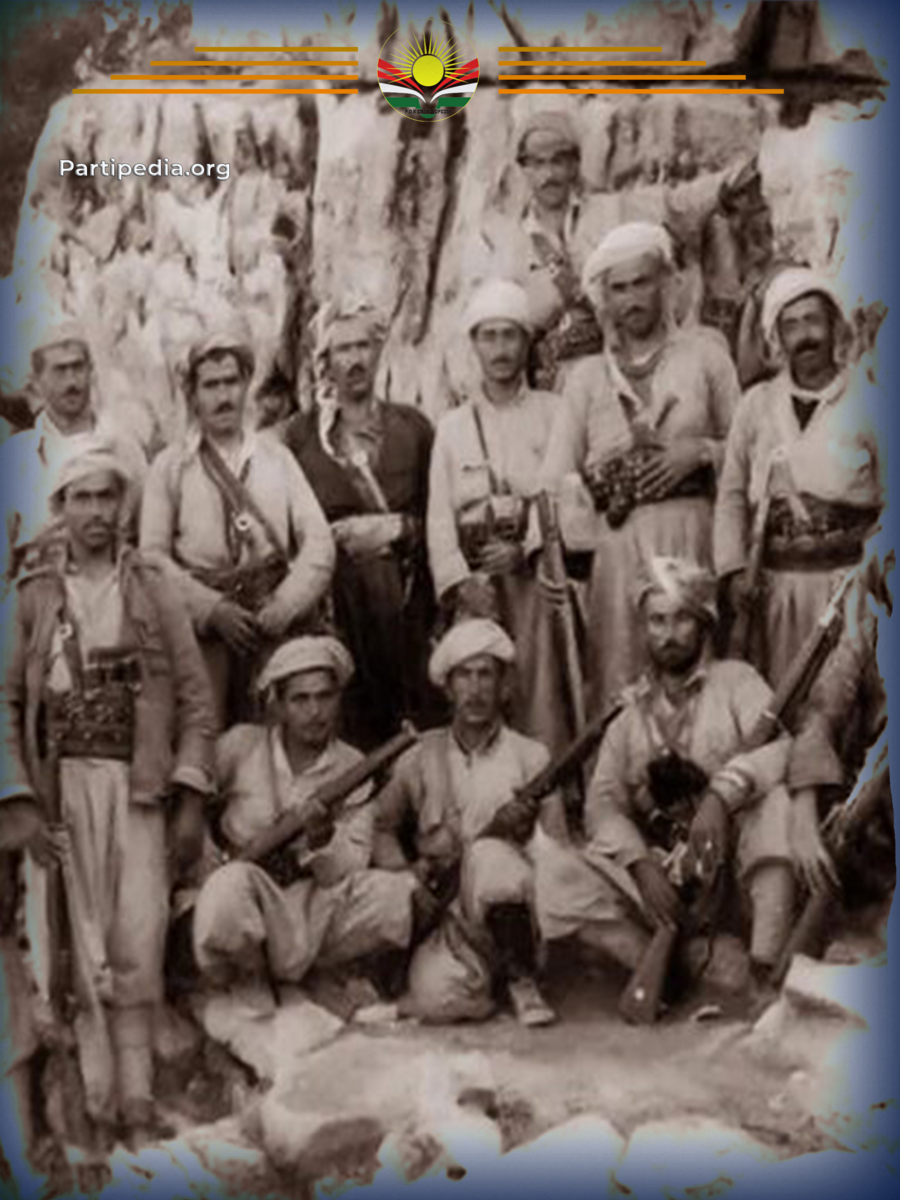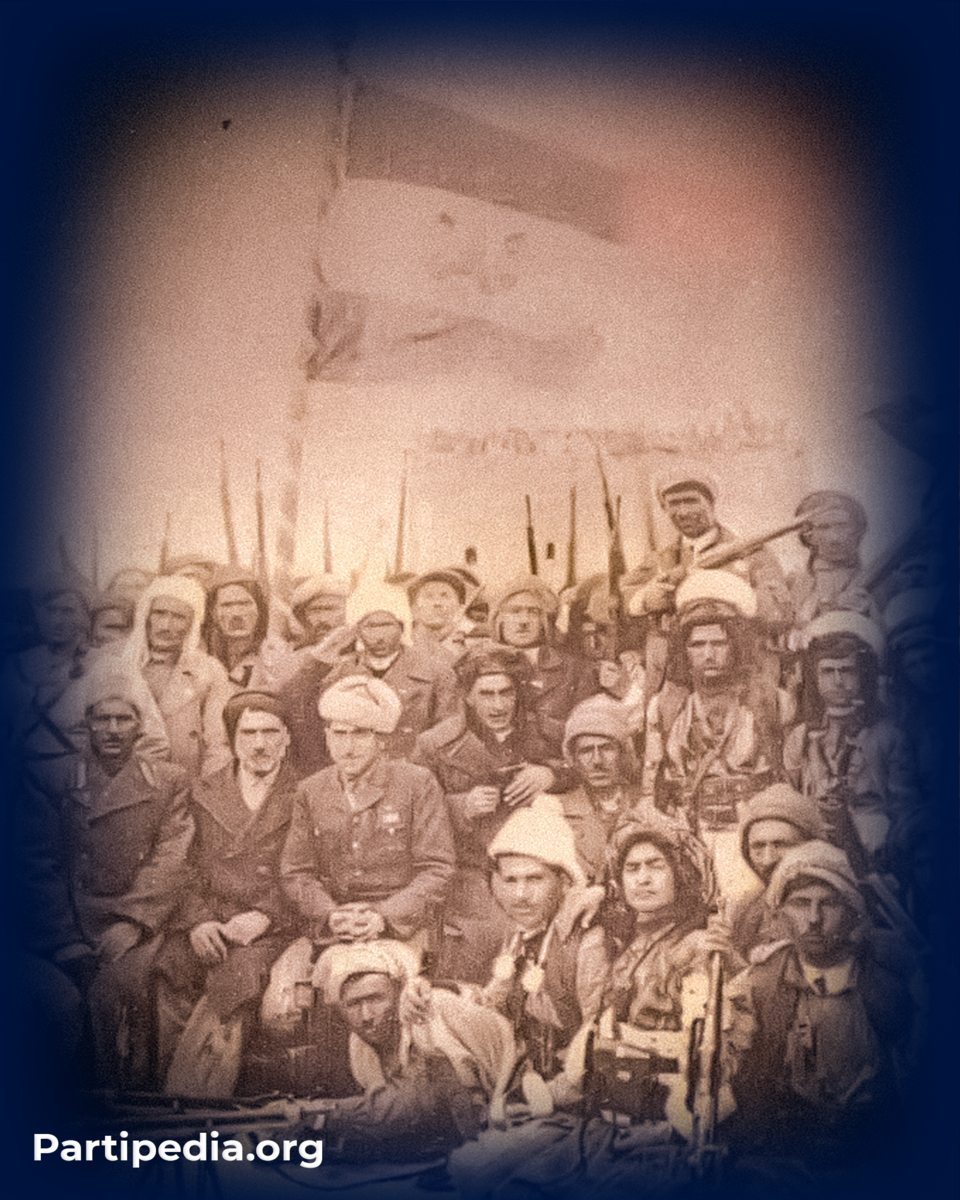


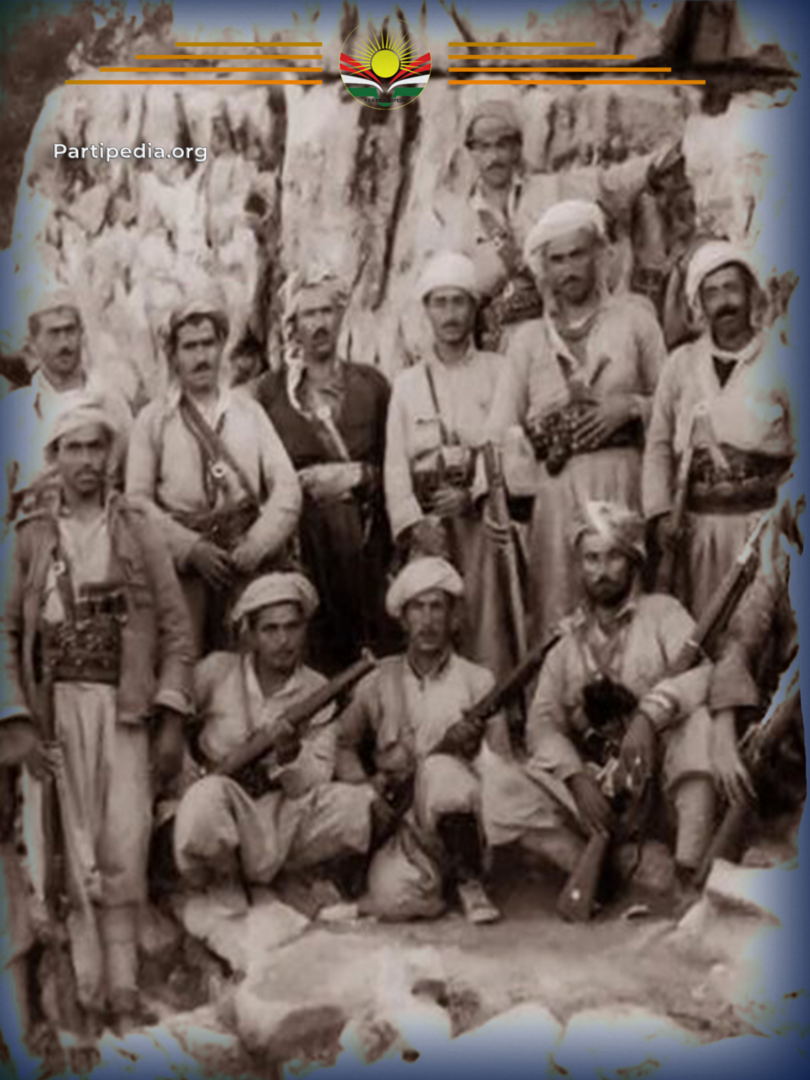
In April 1974, the Baath government decided to resume the war and intensified its attacks on the areas under the control of the revolution. The Erbil Plain Force, led by Faris Bawa, withdrew from Erbil to outside the city, and divided its regiments on the battlefields to establish a defensive line in order to prevent the Iraqi army from advancing and attacking.
The force headquarters was located in the mountain behind Birer and Takur, and the first regiment, led by Sayed Kaka, was stationed in the mountain range behind Baqut and Komtal. The second regiment, led by Corporal Yassin In the Komsban Gorge, the Third Regiment, led by Ahmad Haji Ali, was stationed in Mount Bawaji. Two companies belonging to the force headquarters remained in the Bistaneh area. The newly formed Sefin and Azadi forces were on alert from Mount Sefin to the Bawaji and Heba Sultan mountains. The officials and administrators in Kurdistan Democratic Party They fight on the battlefield alongside the Peshmerga forces.
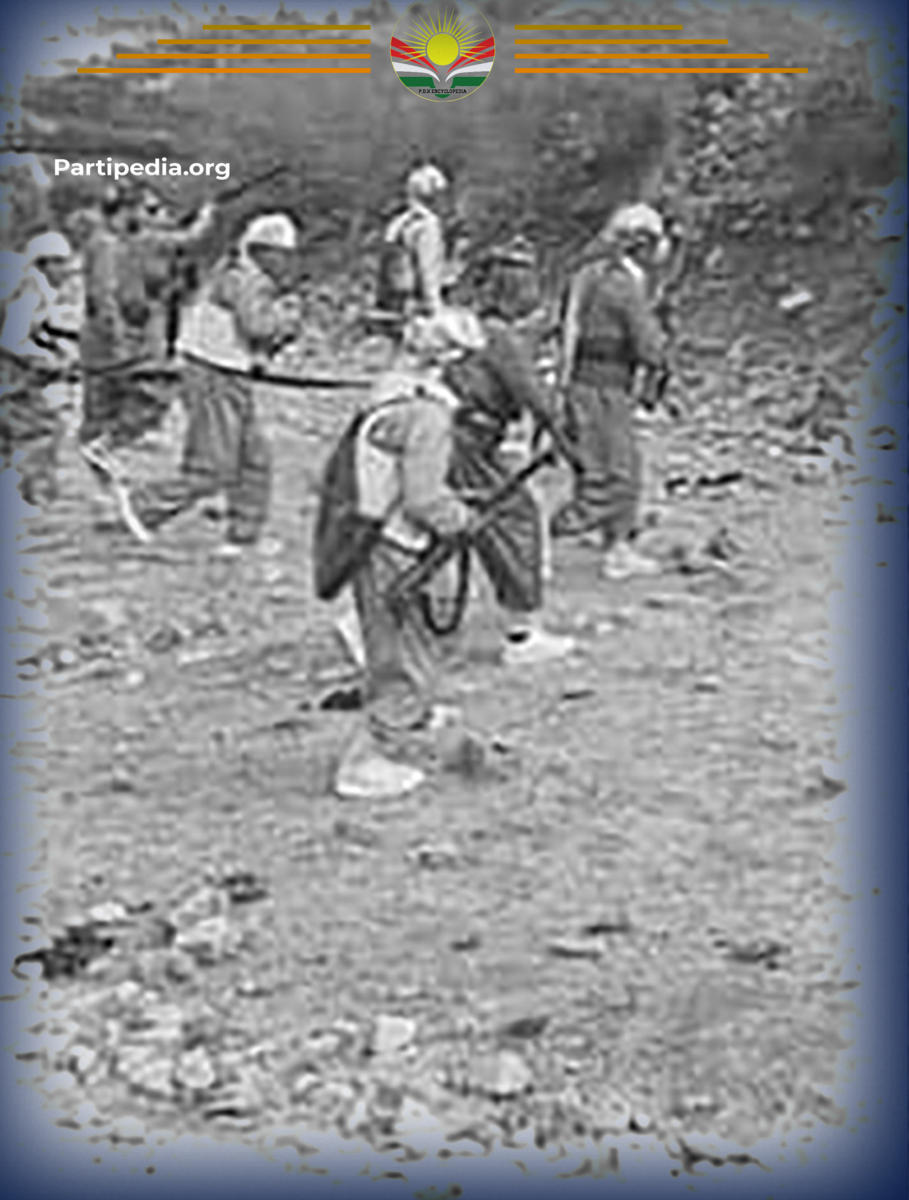
In early May 1974, the Iraqi army, reinforced with tanks and armored vehicles, attacked the Peshmerga positions from two axes. The first axis began to advance from Sari Rash, and the second axis saw the forces that were deployed on the outskirts of the Komsban Pass begin to advance and start their military campaign. The Peshmerga forces began to reinforce their defense line and confronted the army, and both sides suffered losses. However, due to the large number of army soldiers and their presence in an offensive position, they suffered greater losses than the Peshmerga forces.
The Iraqi army initially failed to overcome the Peshmerga forces and breach their defensive line, but after four hours of continuous fighting, they were defeated. However, the artillery from the Sari Rash and Komsban Pass bases continued their bombardment, harassing the Peshmerga forces. The Peshmerga's defensive line was not strong enough to withstand all this shelling. The following day, the army attacked the Peshmerga positions again, and the Peshmerga forces suffered heavy losses in this battle, with five Peshmerga fighters killed and 11 wounded.
As a result of the difficult situation created by the attack of the government and the countless army supported by tanks, artillery and aircraft, the Peshmerga forces were unable to withstand the large-scale government attack, but rather retreated to the villages of Ziyart and Susi on the orders of the higher commands, then continued their advance to the Darband mountains, reaching the village of Diri, and the main road between Erbil and Koya was seized.
Sources:
1- Karwan Jawhar Muhammad, Idris Barzani 1944-1987, Jian and Sarbazy’s political leader, the Ezgari Khwazi Kurdada, (Chanafian Hevi-Holler- 2019).
2- Sahnagher Ibrahim Khishnaw, “Woodawah Sahrbazeh Kani Shih Eilul 1970-1975”, “Chapi Yehkehem”, (Holler - 2022).
3- Sayed Kaka.
4- Khūshid Shirā, Khabat and Khuwayn, Peruvian Sākhānī Peshmergayti, Shaābi Sīm, (Haji Hashim’s Chapkhani- Holler-2015).