


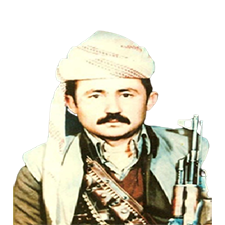
the biography
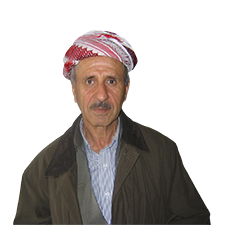
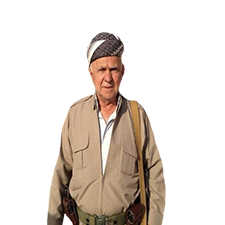
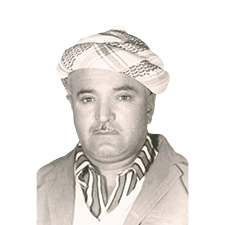
The martyr Muhammad Abu Zaid Issa Abu Zaid, known as (Maho Goda), was born in 1950 in the village of Grenok in the Golia region to a family that loved the Kurds. In 1988, he and his family sought refuge in Turkey, and he was handed over to the Baathist regime in 1989. He was later transferred to Baghdad and executed in the same year.
The pages of struggle
In 1964, Mohammed Abu Zaid Issa Abu Zaid joined the Peshmerga forces under the command of Faris Kurmarki. In 1979, he attempted to bring his family into the revolution, but he was arrested by regime forces. He was released following the issuance of the March 11, 1970, statement. He continued his struggle until the 1975 setback. Eighteen days after the setback, the martyr, along with several of his Peshmerga comrades, carried out four combat operations behind enemy lines. These included killing a regime soldier in the village of Kashani, ambushing an IVA military vehicle on the main road between Zakho and Batifa near the village of Busli, and capturing an officer and three policemen at the Darkar roundabout. He became the commander of a detachment at the beginning of the Gulan Revolution. After the formation of military organizations in 1979-1980, he assumed responsibility for the organization of the martyr Mahmoud Youssef. Enemy forces repeatedly plotted to assassinate him, and in 1985, he was killed along with several others. His Peshmerga comrades were ambushed by regime forces between the villages of Dereshk and Avhe in the Goliyan region. During the clashes between the two sides, three of the regime's collaborators were killed and six others were wounded. As a result, one Peshmerga named (Sidqi Avdel) was martyred and another was wounded. Maho Goda His son, Hikmat, was wounded during that operation.
In 1987, he became the commander of the strike force. He participated in more than 100 combat operations and epic battles, most of which he personally oversaw. Among the most important of these operations were repelling the regime's attack on the Levi region, known as the Armashti attack; the famous Zembil Frosh epic; the Sharansh epic (three times); the Omar Agha epic; and the Goria Omar Agha trenches, where he managed to kill a lieutenant colonel. In recognition of this achievement, he was honored by Mr. Idris BarzaniIn 1988, he and his family sought refuge in Turkey, intending to enter Iran. However, in 1989, through an international scheme involving a sum of money, he was handed over to the Ba'athist regime and subsequently transferred to Baghdad. After several days, he was sentenced to death and executed in 1989.
Source:
Archive of the Encyclopedia Authority of the Kurdistan Democratic Party.