

the biography
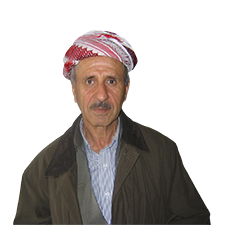
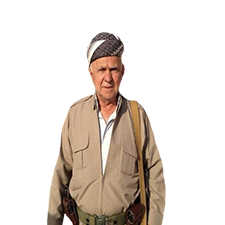
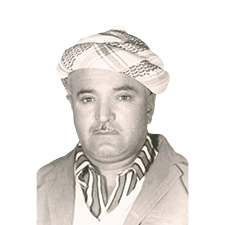
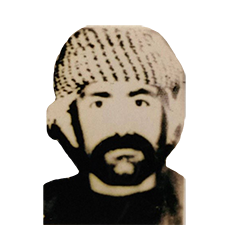
Suleiman Saleh Brakhas Qader, known as (Suleimani Fateh), was born in 1947 in the village of Kani Kawa in the Shemiran region of Darbandikhan district. He was a villager who practiced agriculture. He completed the primary stage. He sought refuge in Iran in 1975 and resided in the city of Mariwan and Sarpil Zahaw. He returned to Kurdistan at the beginning of 1976, and at the end of 1976 he sought refuge in Iran again and resided in the city of Mariwan. He married Mahbouba Marouf and they had two sons and two daughters (Sarbaz, Salman, Kojer, and Bayan).
pages of struggle
In 1963, Suleiman Saleh Brakhas joined the Peshmerga in the Shamiran forces under the leadership of Hama Shamirani. At that time, the Shamiran force was an independent force that took orders from the leadership of the revolution, and the limits of its activities were the Shamiran and Nawroli regions. However, after the completion of the military formations of the September Revolution in 1965, it remained as an independent force as it was, and was added to the Khabat forces of the Kurdistan Democratic Party.
He was seriously wounded in the Battle of Zamnako in 1974 against regime soldiers and in clashes with Peshmerga forces affiliated with the Democratic Party of Iran in 1980 in the Dezli Pass. He sought refuge in Iran in 1975 and returned to Kurdistan in early 1976, only to be deported to southern Iraq. He again sought refuge in Iran in late 1976 and joined the Shamiran forces. During the September Revolution, he held the positions of platoon commander and company commander in the Shamiran forces. In 1980, during the Gulan Revolution, he assumed the position of commander of the Shamiran Regiment, which was part of the Hawraman forces under the command of Nader Hawrami. In 1981, after the Peshmerga regained control of Mount Sharam, the Ba'athist regime again bombed Peshmerga positions, and Suleiman Saleh was seriously wounded in the shelling. His fellow Peshmerga fighters transported him to Mullah Khord, from where he was airlifted by an Iranian government helicopter to a hospital in Tehran. He died after spending one night in the hospital. He succumbed to his injuries, and his body was buried in the cemetery of the city of Marivan.
Source:
Archive of the Encyclopedia Authority of the Kurdistan Democratic Party.