

the biography
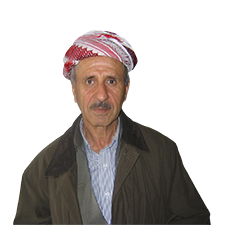
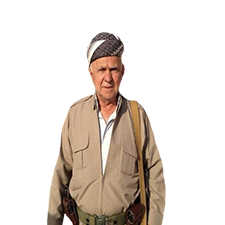
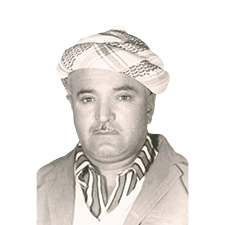
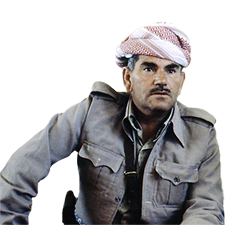
Yassin Mohammed, known asCorporal Yassin Doski was born in 1932 in the village of Biri, in the Amadiya district. He was affiliated with the Sarsang police station, then became a corporal and was transferred to Mosul. He spent two months in Erbil, taking on the task of protecting the border between Kila Shin and Khinira. He was granted the rank of chief corporal by the government. He served in the Shirwan police station for a year and six months, and was transferred again at the request of Sheikh Ahmed Barzan to the Tel station. He was then returned again by the government to the Shirwan police station. He was the commander of the post in Barzan for nine months, and was transferred again to the Tel station on the pretext of his opposition to the director of the Barzan region police. He sought refuge in Iran in 1975 and resided in the Zewa complex. He died on February 22, 1992.
The pages of struggle
In 1960, Corporal Yassin Doski joined the Peshmerga forces along with all the members of the police station, bringing with them their weapons, ammunition, and radio. September Revolution In 1961, as commander of a detachment in the Swaragha force, he participated in the first battle at Mount Shirwan. He became an assistant to the strike force commander, Muhammad Amin Mirkhan, after the liberation of the Bahdinan region by the leader. Mustafa Barzani Before heading to the Soran region, he participated in the battles of the Bahdinan region, including the battle of Beytnur, Qumri, Kani Balav, Zyuki, Bisveki, Darya, Kamka, Germava Haji Agha, Lomana, Zawita, Seri Zeh, Siwar and Spindar, Seri Atrush, Kafr Sur, Kulah Behi, Talbizina, Nahla, Seri Akri.
In 1962, he went to the Soran region and participated in the battles of the Bishi Gorge, Berserben, Dargala, and besieged the Galala and Choman barracks and the Rayat Castle for 42 days. They dug an underground tunnel on the orders of Corporal Yassin to control the castle. He was in charge of the force in Mount Siyako, and participated in the battle of Mount Gardan Hoshtar. Under the leadership of Corporal Yassin, the district governor and the director of the Mirgasor sub-district were arrested, and all belongings and supplies were confiscated.
He was the commander of one of the Peshmerga companies under the command of Colonel Abdulkafi Nabawi on July 13, 1963, during the Iraqi army's attack on the Peshmerga forces in Sablik, and he participated in the battles of Sablik and Darband Kori.
In 1963, he was in charge of the Sabilak region, and in one of the battles on the Khalifan-Sabilak road, they managed to capture all members of one of the regiments. He was wounded in the Battle of the Erbil Plain in 1963, and after receiving treatment, he returned to the Hawdian region. He participated in the battles of Hawdian, Dhira' Dari, Mazni, Shitni, Lilok, Khardan, Bistri, the Wajii Gorge, the Gortu Plain, Kulana Dari, and Tel Bersiavi, and was wounded a second time. His headquarters was transferred by order of the leader. Mustafa Barzani AlÎ Galala and Wadi Shahidan, and participated in the battles of Omer Qom, Gamo, Siri, Jabal Bar. He was a commander of the front and participated in the battle of Hafez, and returned to the Bishi Pass, and there he participated in the battles of Garwi Omar Agha, Khalaf Badliyan, Sarukani Diana, Sartiz, Zozk.
In 1966, he became a regimental commander and led Peshmerga forces in the battles of Mount Zozak and Garwi Omar Agha. In 1967, under the command of Corporal Yassin, Peshmerga forces captured the outpost of the Hiran mobile forces in the village of Sathendara. In 1970, he became a company commander in the 10th Regiment in Kani Smaqok, part of the border regiments. After the resumption of fighting, he served as the commander of the Turz front, where he oversaw numerous battles and was wounded for the third and fourth time, on the orders of the leader. Mustafa Barzani In 1970, he became a commander of forces, and after the 1975 setback, he became a member of the committee overseeing refugees in the Zewa camp.
Corporal Yassin participated in the Golan Revolution and the provisional leadership, and was responsible for the local areas of Nerwa, Rikan, and Doski Zhori. He participated in the battles of 1976-1979. In 1979, he participated in the ninth conference of the Kurdistan Democratic Party. In 1952, during the organization of the Peshmerga forces, he was the commander of Force 57 and a member of the operations command for the Shino and Kila Shin regions. In 1983, by order of the President Masoud Barzani He became the local official for Doski Zhori within the borders of Region One, by order of the President Masoud Barzani In 1986, he became an active member of the Golan Local Committee and supervisor of the military section until 1987. In 1988, he participated in the Battle of Khwakurk and was a member of the Khwakurk Operations Command. He was also responsible for the military section within the boundaries of the First Branch, in addition to being responsible for the Sidakan axis.
Sources:
Archive of the Encyclopedia Authority of the Kurdistan Democratic Party.
Masoud Barzani, Barzani and the people of the Ministry of Foreign Affairs, Holer, Barzani and the Ministry of Foreign Affairs 2004g, l7, 134, 136.
Youssef Sabri and Delivan Mustafa, “By Ezadi ya Velati”, “Shakka”, “Chapa Khanya Khani”, Dehchek, 2012, no. 231, 277.
There are many things that can be said about the medicine of Qaraman Arif Yassin Deshsky, British Journalism, Mar. 2532, Höller, Duşma 23/Shubat/1998, no. 6.