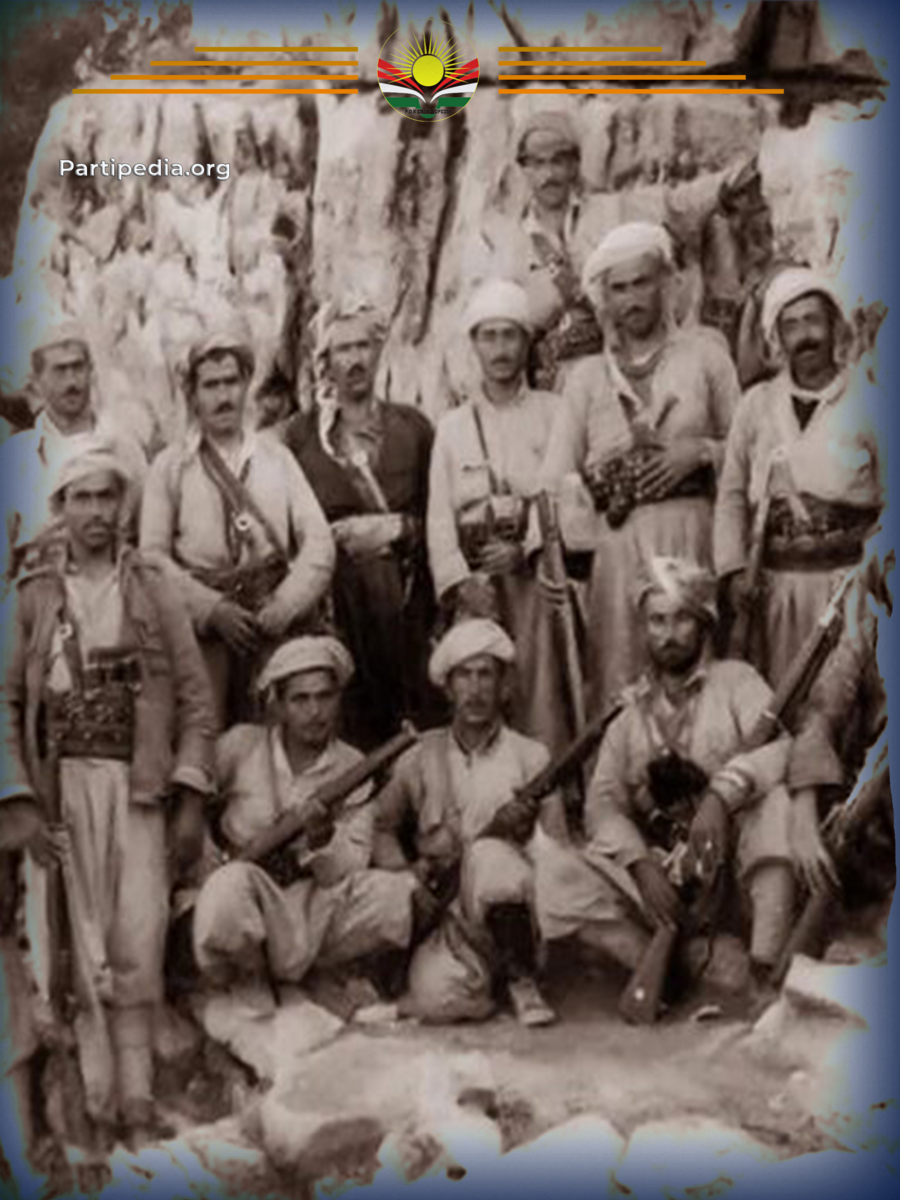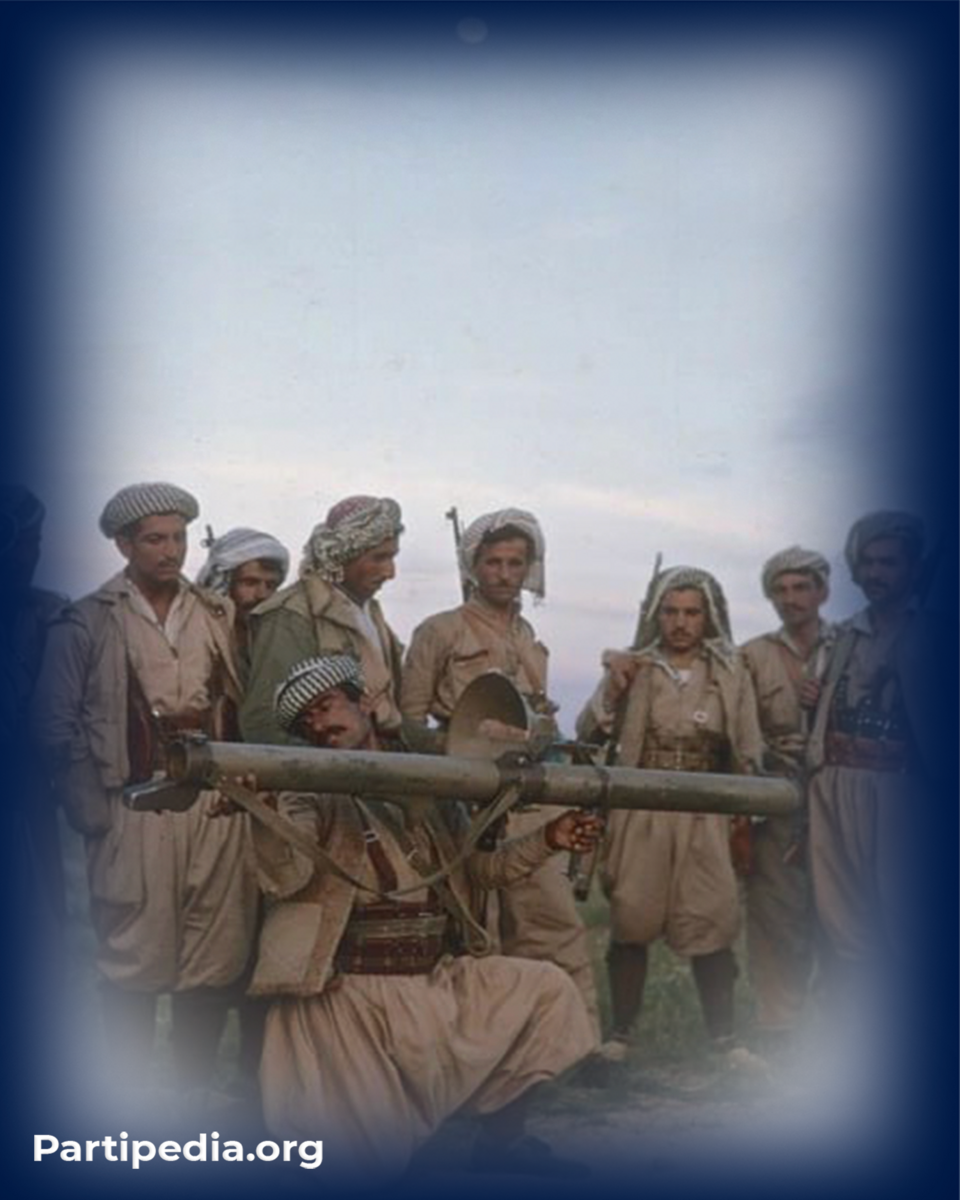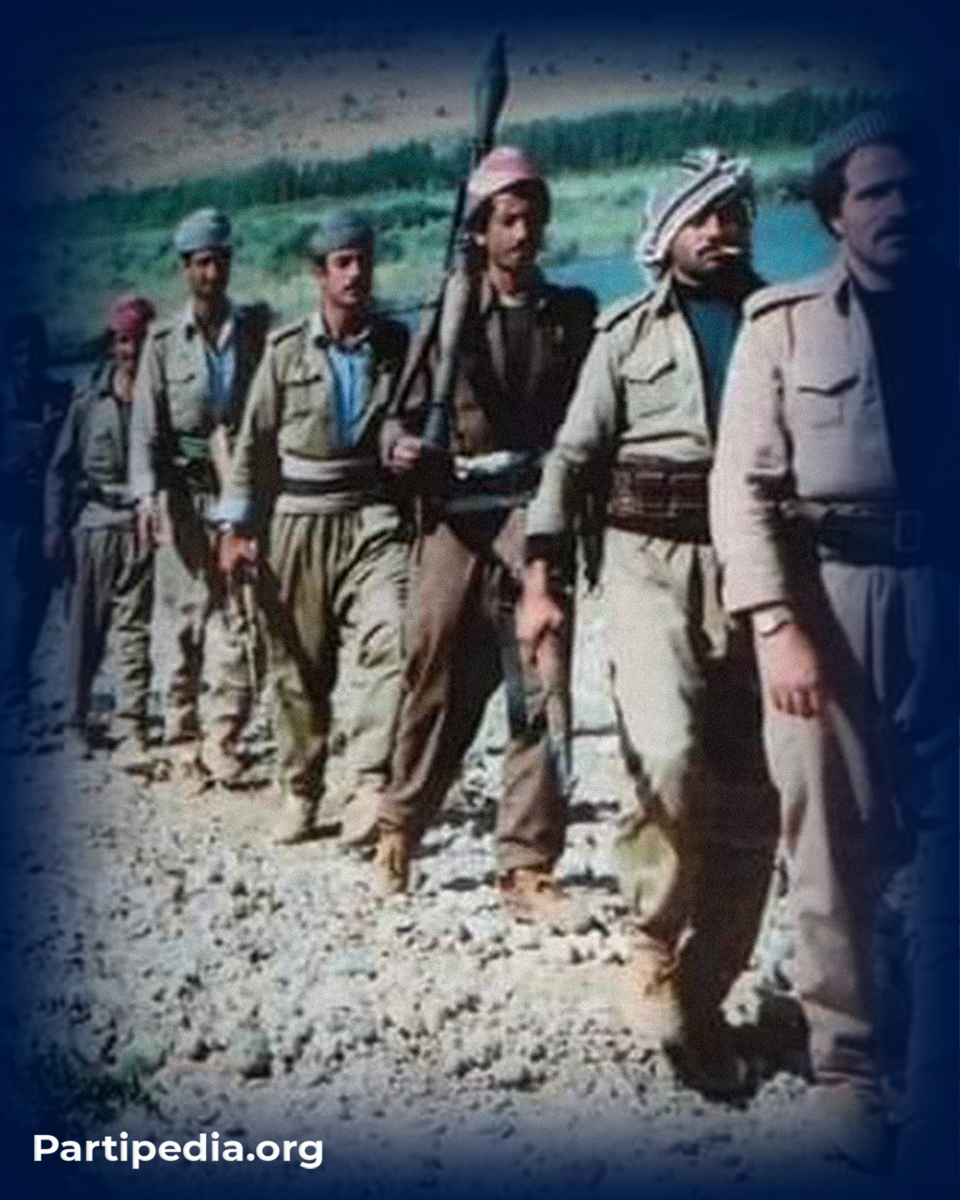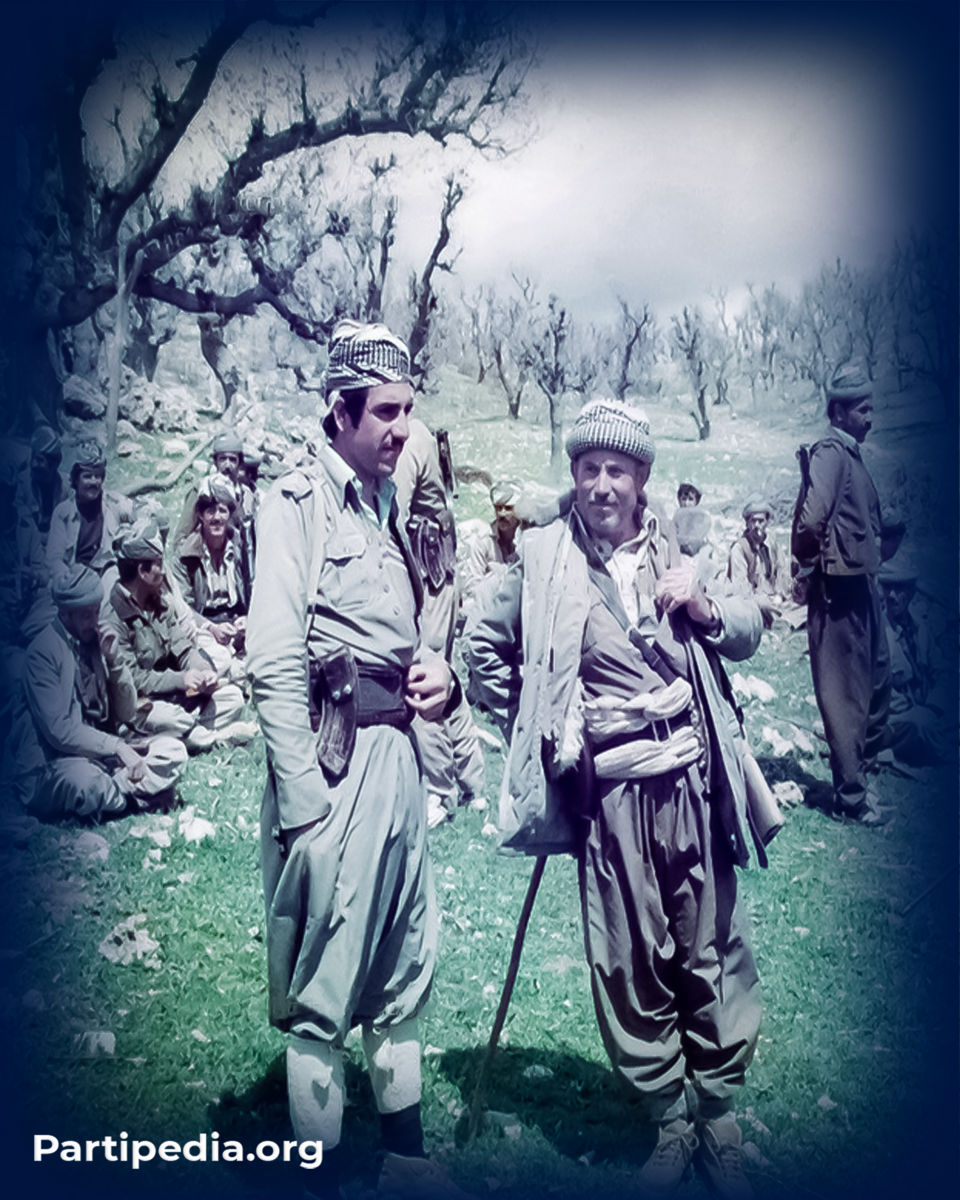


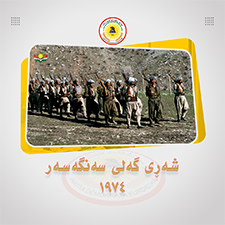
The Iraqi government, which imposed war on Kurdistan in 1974, launched attacks on the revolutionary areas in such a way that it used all military capabilities, a huge army of hundreds of thousands of soldiers, hundreds of modern tanks and all kinds of air weapons.
Of course, in every revolution and uprising, the high mountains have been the place of resistance and defense of the revolution. We always rely on the Peshmerga in defense military. The Iraqi regime planned to intensify its attacks on the revolutionary areas in August and September in order to capture strategic locations before the winter.
Although the Iraqi army had suffered heavy casualties in its attacks on the Peshmerga positions, it continued to invade with the support of large air forces, Soviet military experts, and mercenaries (jash). 1 and 12 Armored Forces, supported by the 3rd Tank Battalion, began their advance towards Sangasar village, which is located at the beginning of Mount Assos on the right and the beginning of Mount Kewarash on the left.
In the face of the huge Iraqi army forces that were crossing the road to occupy the city of Qaladze, a battalion of Kawa and Asos battalions were stationed in Sangasar village, which was the only place to prevent the army from reaching Qaladze The fighting continued for about 10 days. Although the Iraqi army suffered heavy casualties, it always insisted on reaching Qaladze. There were martyrs and wounded in the Peshmerga forces On August 19, 1974, Iraq entered and captured the city of Qaladze.
On September 3, they attacked an Iraqi army base in Tuwa Soran, located on the Ranya-Qaladze road. The attack began with shelling the base and then attacked the military base They were about to take over the barracks, but after the martyrdom of Peshmerga commander Ezadin Qara Mohammed, they stopped taking the barracks and retreated with the Peshmerga forces.
resources:
-
Massoud Barzani, Barzani and the Kurdish Liberation Movement, Volume III, Part II, September Revolution 1961-1975, First Edition – Erbil, 2004.
-
Sangar Ibrahim Khoshnaw, Military Events of the September Revolution 1970-1975, 1st Edition, Erbil, 2022.
-
Karwan Jawhar Mohammed, Idris Barzani 1944- 1987 Life and political and military role in the Kurdish liberation movement, Hevi Printing House, Erbil,
-
Col. Khadr Abdullah Dabagh, My Memories and the Artillery of the Great September Revolution, Roshnbiri Printing House, 3rd Edition, Erbil –
-
Ibrahim Jalal, South Kurdistan and the September Revolution, Building and Demolishing, 1961-1975. Fourth Edition,