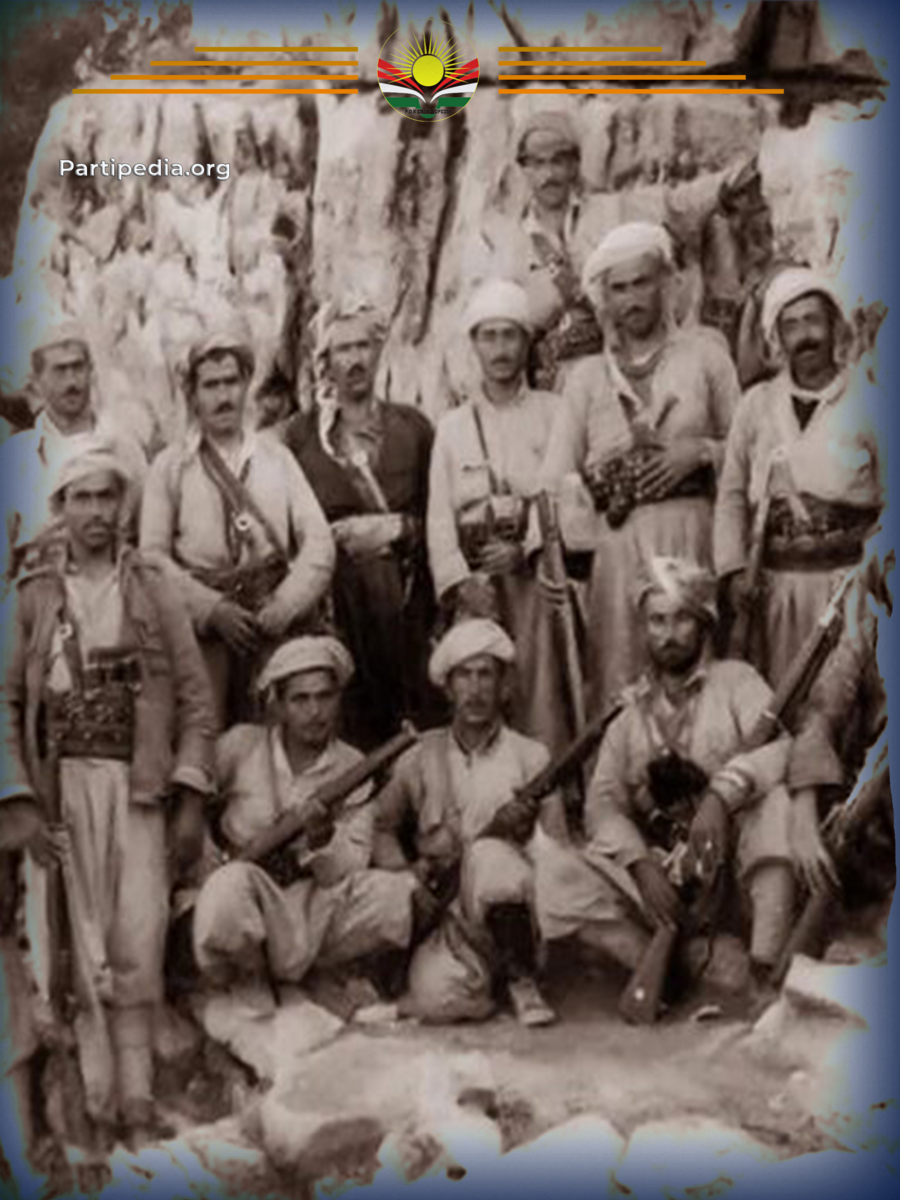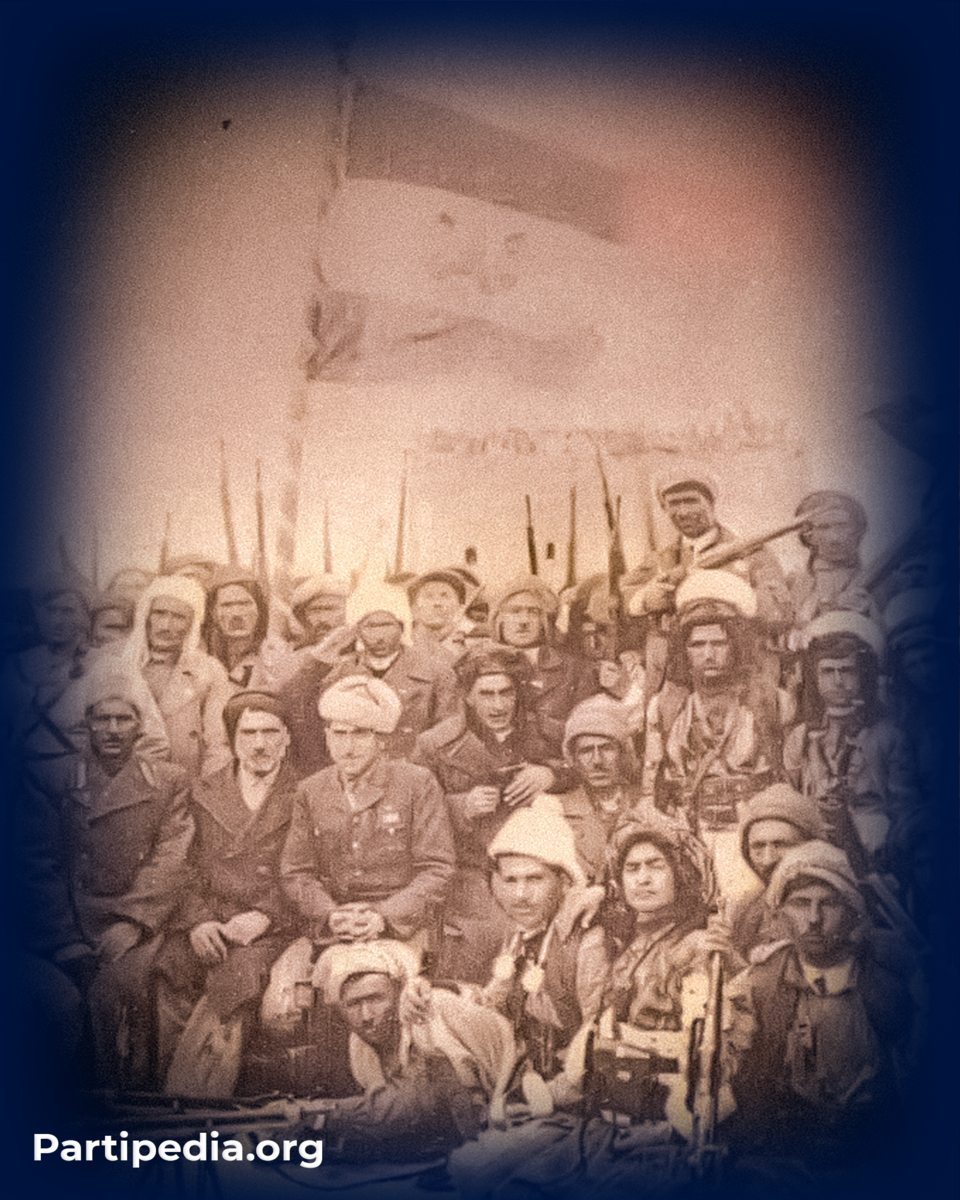


In February 1963, the Baathists overthrew Abdul Karim Qasim and his government in a military coup and took control of the government in Iraq. The Kurdish revolutionary leadership expressed its support for the new government and its hope for a peaceful and just resolution to the Kurdish issue, although the Baathists initially lacked the strength to fight the Kurdish revolution, so they declared a ceasefire and negotiations began between them.
It is clear that the negotiations did not last long because the government was able to mobilize and reorganize its forces within three to four months. It then threatened to suppress the Kurdish revolution and refused to negotiate with the revolution's leaders. In June 1963, the government resumed its attacks on the areas of the revolution and in all areas under the control of the Peshmerga forces. From the first day of fighting, the Iraqi army moved from Mosul to Zakho and other areas of Badinan, and from Kirkuk to the plain of Koya, Chamchamal, Sulaymaniyah, Ranya and Qaladze, and on another axis from Sulaymaniyah to Qardagh and Garmian, as well as from Baghdad to Khanaqin, and began moving from Kifri, Kalar, Darbandikhan and Shahrazur.
The Iraqi government’s plan this time was to create battlefields on several fronts to separate the Peshmerga forces from the areas under the control of the revolution. In the attack, all the villages, mountains, plains, and valleys of Kurdistan were burned, especially when the attack was in the summer, which is the harvest season, in order to seize the Peshmerga positions, starve the Kurdish people, and cut off the sources of funding for the Peshmerga.
This time the Iraqi government’s attack on Kurdistan was different from other attacks, because of the agreement it made with the Syrian government to help suppress the Kurdish revolution, as the Baath regime had taken power in Syria at that time in the name of the (Yarmouk) forces under the leadership of Colonel Fahd al-Shaer, who crossed the Iraqi border and supported the Iraqi army in attacking the Peshmerga forces.
On November 1, 1963, the Iraqi Army, with its 3rd and 5th Brigades under the command of Colonel Said Hammo, supported by a tank battalion, a Syrian military force, and mercenaries (Jash), launched a large-scale attack on the Chemi Rezan region. The attack extended from the Shwan and Sheikh Bazini areas to the Aghjalar district, and government forces besieged several locations, including Tasluja, Askar village, Qalat Khalifan, and areas near Dokan, reaching as far as Chemi Rezan.
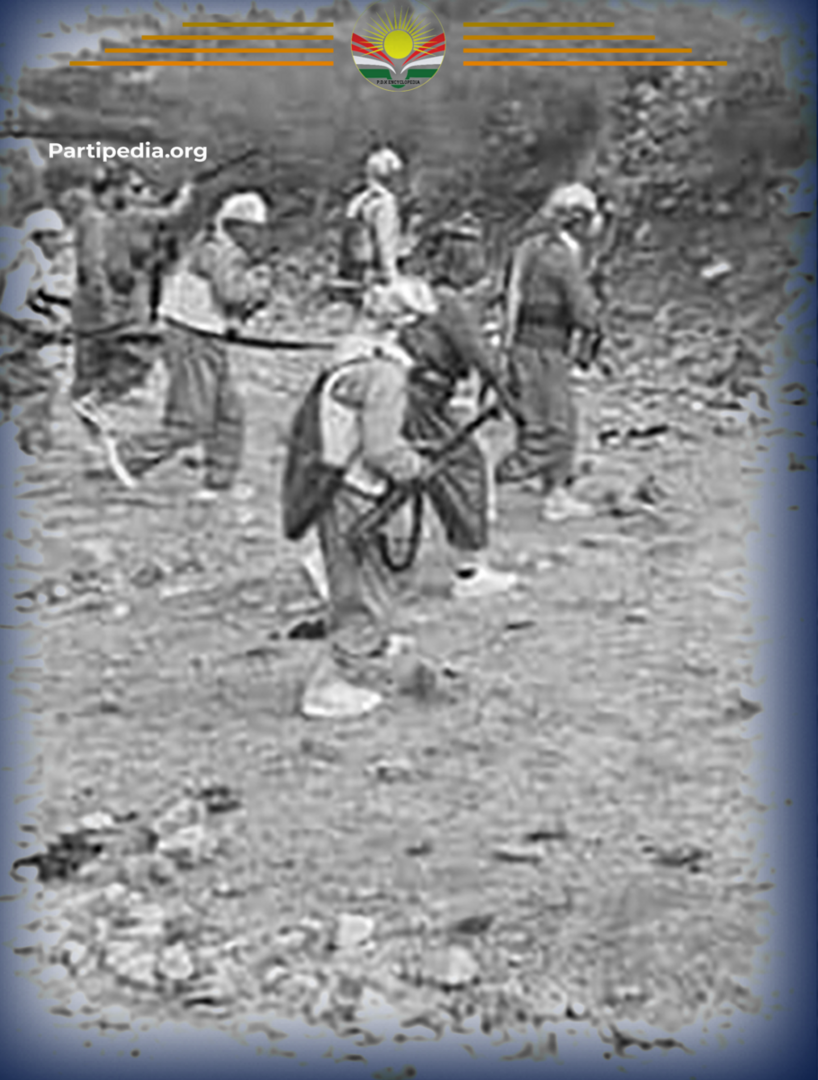
The Peshmerga forces of Rizgari, who were responsible for defending the area, resisted the government attack and inflicted heavy damage on it, but the government forces persisted in their attacks, and after a week they were able to take control of Chemi Rezan.
The Peshmerga withdrew their forces to the Surdash, Pira Makrun and Jafaiti Valley areas due to the lack of weapons, especially anti-tank weapons. However, the Peshmerga forces continued their guerrilla operations to strike enemy positions, set up ambushes on public roads and direct attacks against government forces.
After capturing Chemi Rezan, the government sought to isolate and besiege the areas of Qardagh, Kalar, Kifri, and Darbandikhan, aiming to completely destroy the Peshmerga forces. It launched an invasion from Bazian, Sulaymaniyah, and Kirkuk. The Peshmerga forces in that region split into three groups. One group headed to the difficult areas of Sartaka, Bamo, and Darbandi Bilula, where they engaged government forces for over two months, relieving the burden of fighting in other areas. The second group carried out two major operations in Zambur and northeast of Kirkuk, targeting oil wells.
The third part began with an attack and pursuit of government forces that headed to attack and capture the town of Qardagh. In this battle, a large number of soldiers and officers from the Iraqi army, the Syrian Yarmouk Army, and mercenary Arab militias participated, who came to fight the Kurds wearing white dishdashas and agals, and a number of them were killed and wounded.
This weakened the government forces to the point that they were no longer able to attack, and they also faced problems with the Syrian Yarmouk forces. To escape this crisis, he was forced to resort to negotiations at the end of 1963. In early 1964, he contacted the political bureau of the Kurdistan Democratic Party through a Kurdish officer named Karim Qarni. In January 1964, the leader of the revolution, Barzani, met with the governor of Sulaymaniyah, Brigadier General Abdul Razzaq Sayyid Mahmoud, in Rania, and after several meetings, a ceasefire was declared.
Sources:
1- Khishoy Ali Kani Linji, Peru Perikani Aziz Qazi Surchi, (Chaphani Danishfar - Hewler - 2023).
2- Masoud Barzani, Barzani and Bazutniyeh Ezgari Khwazi Kord, Barghi Seyyim, Bashhiyyikum, SHORSHEY EYLOOL 1961-1975, (Chapi Yekim - 2004).
3- Ibrahim Jalal, Bashouri Kurdistan SHORSHEY EYLOOL Benyadnan and Hetikandan 1961-1975, Chapi Chawarim, (2021).
4- Shawkat Mela Ismail Hasan, The Ministry of Foreign Affairs - Holler - 2007.
5- This is Masoud Sarni, Shorsha Eloni of Devera Behdinan 1961-1975, Chapman, (2018).
6- My name is generous, I love you so much SHORSHEY EYLOOLDa, (Chapkhany Khabat - Dehk - 1999).