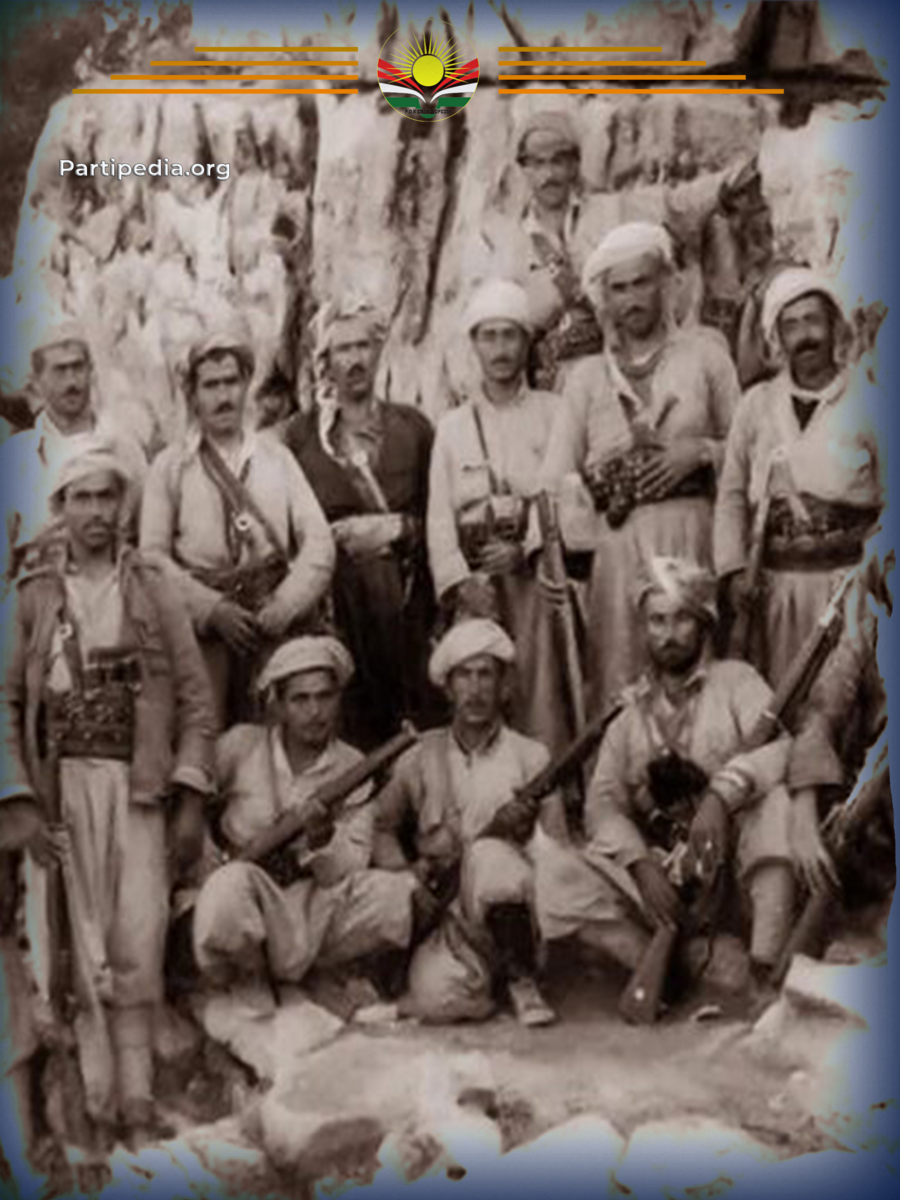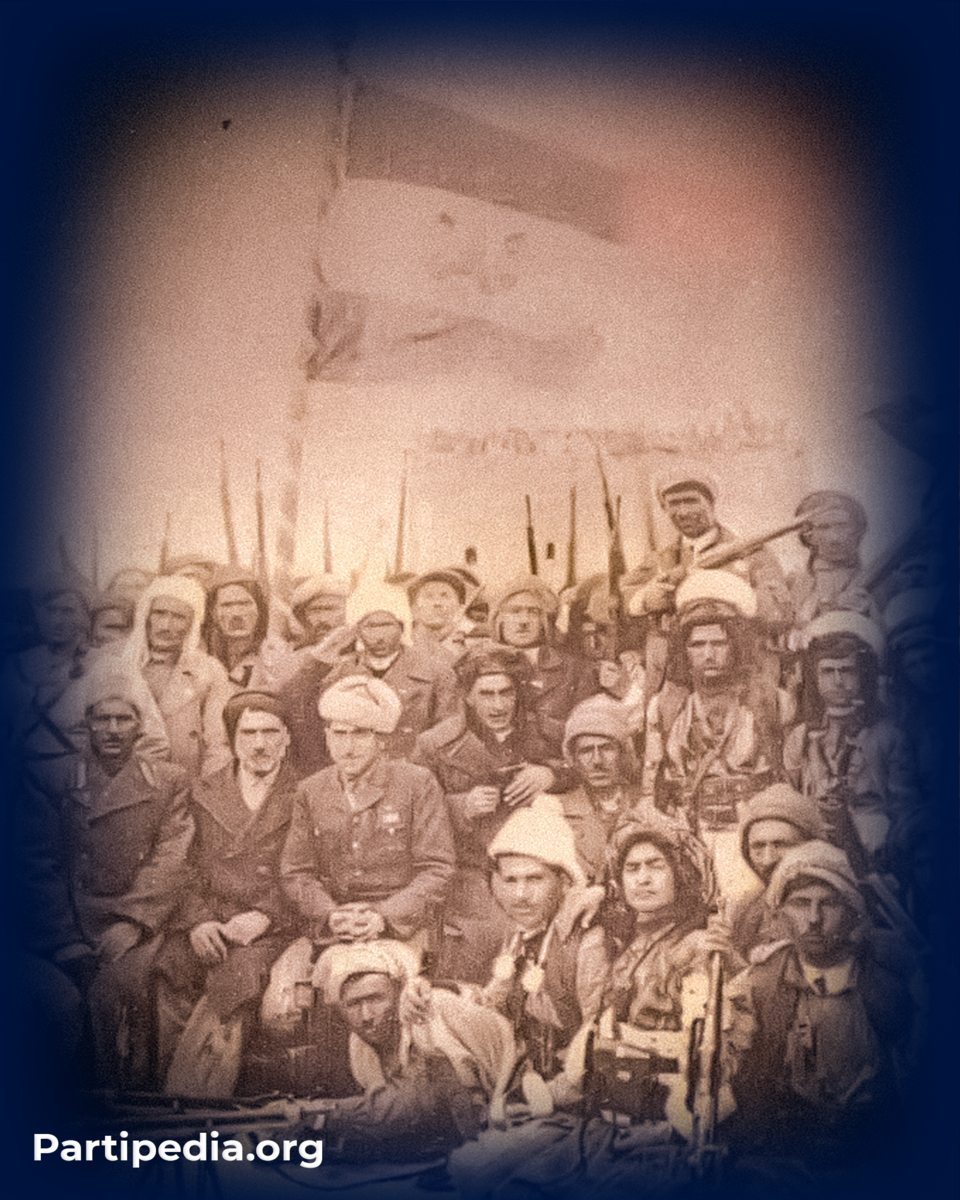


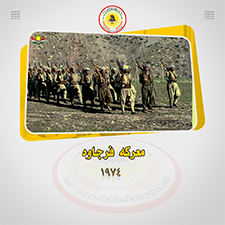
When the Iraqi government declared war on the Kurdish revolution in 1974, it launched a large-scale offensive against Kurdistan, assembling a massive army of over a quarter of a million soldiers equipped with all manner of advanced and heavy weaponry, including hundreds of modern tanks and air defense systems, in addition to aircraft. Its objective was to eliminate the Kurdish revolution. September RevolutionUnder the Treaty of Friendship and Cooperation between Iraq and the Soviet Union.
Like all other regions of Kurdistan, the Garmian region was subjected to military occupation campaigns, as the army attacked it from three directions: from the north, south, and west. The army sent its forces from Sulaymaniyah, Halabja, and Kirkuk to control all of Garmian's lands. Lieutenant General Abdul Jabbar Shanshal and Lieutenant General Saeed Hammo, commander of the northern region, attributed the seizure of Garmian to several reasons, including: it is a large region that includes large cities such as (Khurmal, Halabja, Sirwan, Arabat, Said Sadiq, Darbandikhan, Sangaw, Qardagh), and the high mountains were a support for the revolution in all eras and times, and this constituted a danger to the government. Also, narrowing the areas of the revolution in order to block the way for the Peshmerga to descend into the cities and launch attacks on the Iraqi army.
The Iraqi army assigned a number of military units to launch this attack, including: the 14th Brigade of the 1st Division, led by Colonel Abdul-Jabbar Al-Safi, the tank battalion led by First Lieutenant Raad Al-Hamdani, the air force, and the mercenary militias (Jash). The designated units in the Iraqi army began their preparations for the attack on June 1, 1974, in the Qalyasan area south of Sulaymaniyah, and continued for three days. After that, the army began moving on the morning of June 1974. The Peshmerga forces confronted this attack in the village of Farjawa and prevented the army from advancing. The Peshmerga were able to inflict heavy losses on the Iraqi army forces. The battle continued until noon of the same day, resulting in the death of a large number of soldiers and mercenaries. The Peshmerga forces were able to capture about (20) soldiers and mercenaries. On the side of the Peshmerga, three were martyred and a number of others were wounded. After the army suffered defeat, it bombarded the villages, rural areas, and Peshmerga positions and trenches in the region.
The following day, the army continued its offensive, supported by warplanes and aided by mercenaries (Jash). They managed to seize Arabat and advance towards Darbandikhan. Before reaching their objectives, they clashed with Peshmerga forces again at the Tanjero Bridge in Zarain. A fierce battle ensued between the two sides. Although the Peshmerga forces managed to inflict losses on the army as it advanced in the area, their numbers were small compared to the army's overwhelming force. The army's forces included (16) armored vehicles led by Colonel Mahmoud Wahib, who came from Jalawla. Therefore, the Peshmerga could not hold their ground and retreated, allowing the army to enter Darbandikhan.
Several days later, specifically on June 9, 1974, a Peshmerga force attacked the Iraqi army in the Qardagh area, aiming to strike and inflict losses on army units. On June 11, Peshmerga forces launched an attack on the 90th Reserve Brigade, which was tasked with protecting Zarain. This operation was part of the guerrilla warfare, and the aim of this attack was to send a message to the army that the Peshmerga forces were lying in wait for them and would confront them anywhere, and if they were able to occupy an area, they would not think that the Peshmerga forces would stand idly by.
Sources:
-
Shawkat Mulla Ismail Hussein: The Ministry of Foreign Affairs, 1961-1975, Ministry of Foreign Affairs, Holler - 2007.
-
Karwan Jawhar Muhammad: Idris Barzani 1944-1987, Jian, politician, and Sarbazi, led by Bozutna and Ezgari Khwazi Kordda, Chapkhani, Hevi, Holler, 2019.
-
- Masoud Barzani: Barzani and his wife, the Ezgari Khawazi Kurd, Barzani Seyyim, in the name of God, September 1961-1975, etc. - Holler, 2004.
-
Sahnagher Ebrahim Khishnaw: What is the most important thing in the world 1970-1975? Höller, 2022.