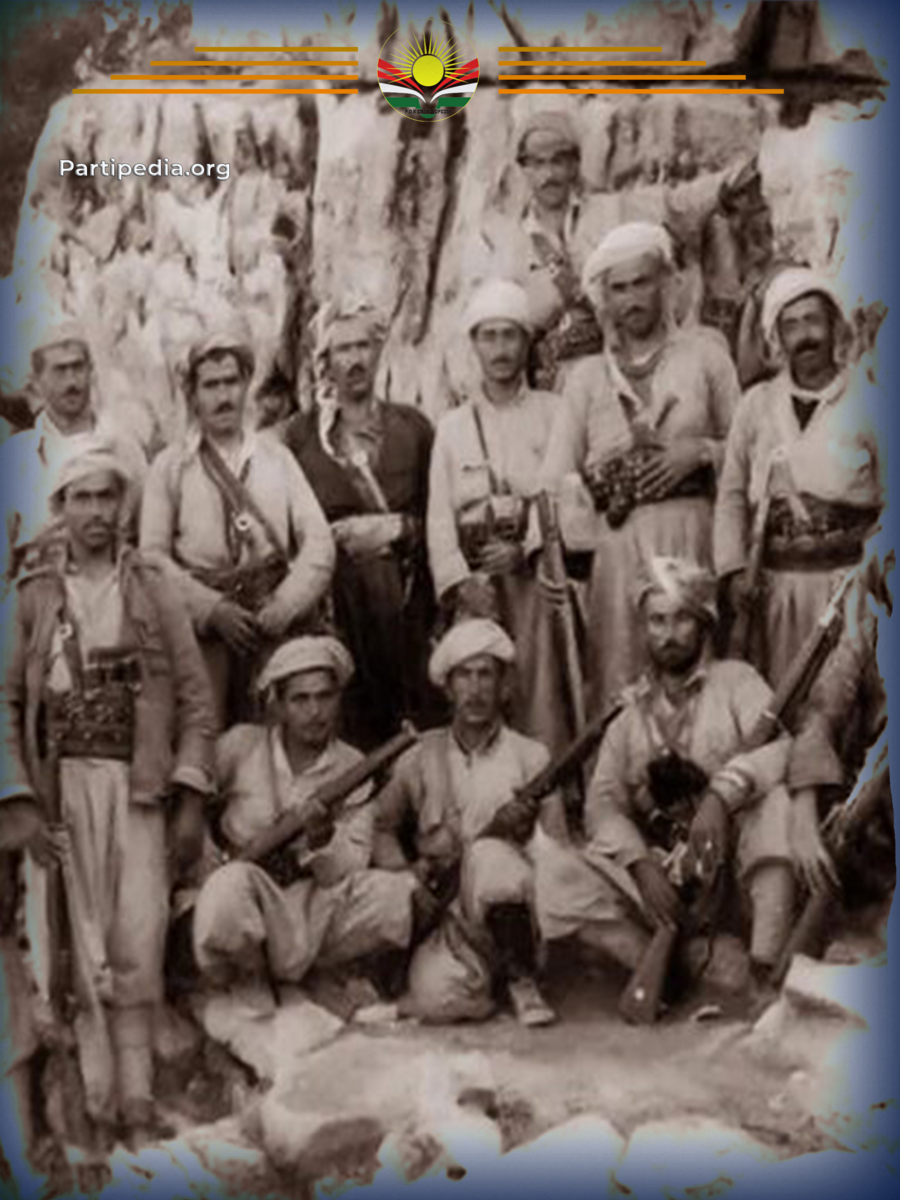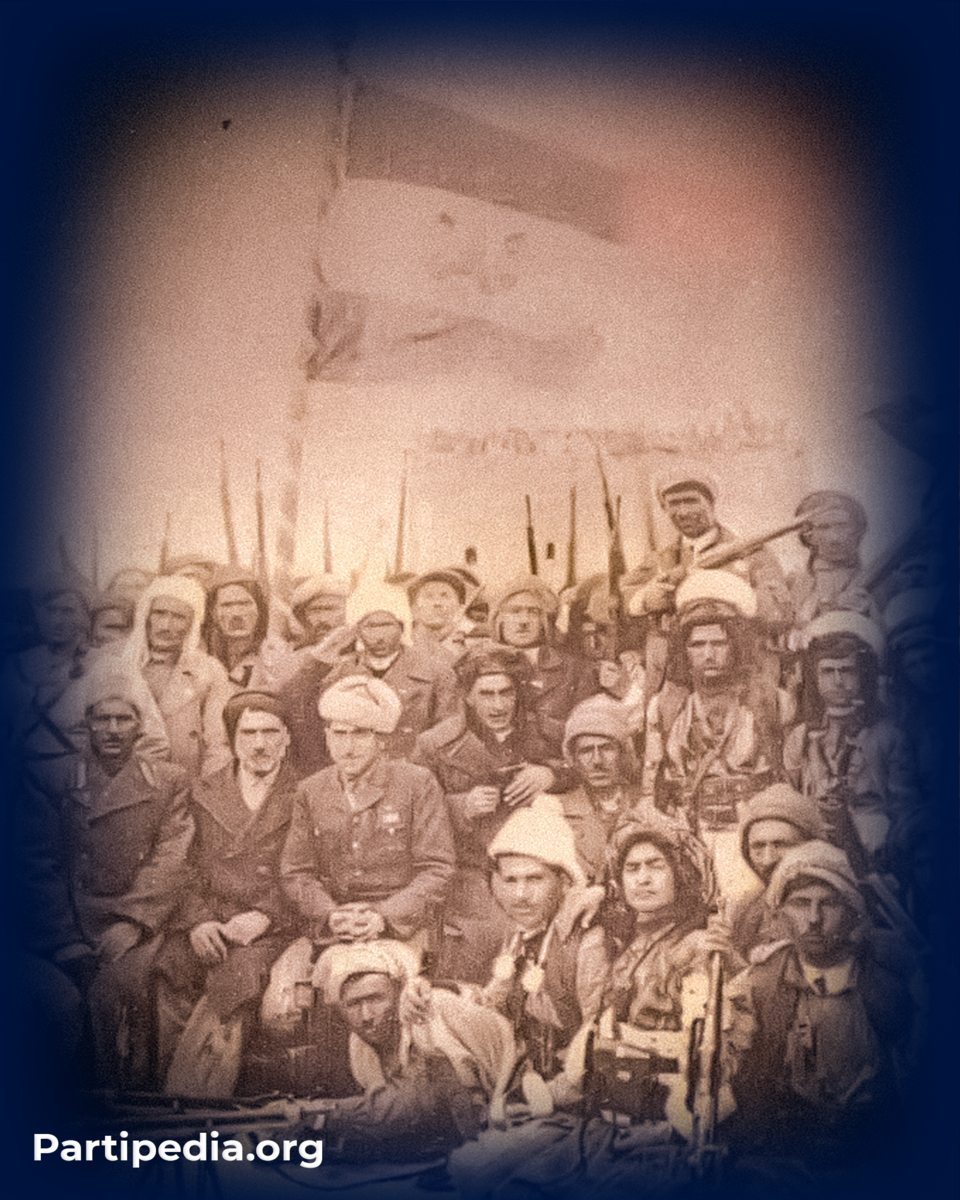


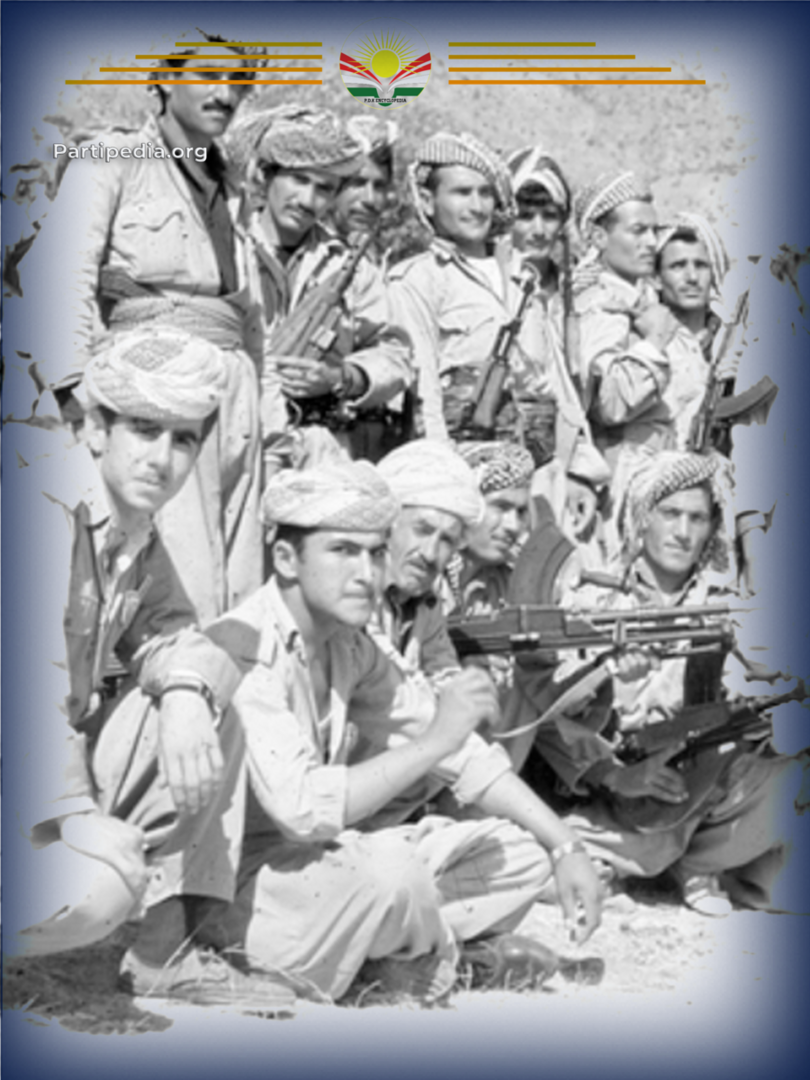
In 1968, Iraq was experiencing a unique political situation, witnessing two military coups within a few days. July 17 and 30 were the dates on which the Ba'athists overthrew the regime of President Abdul Rahman Arif and Prime Minister Abdul Razzaq Nayef, assuming power in Iraq for the second time. During this period, there was no fighting between the Peshmerga forces of the revolution and government forces until the end of 1968. However, clashes continued between the Peshmerga forces and the militants of the old wing of the Political Bureau, and these clashes were more intense, with minor battles occurring between the Peshmerga and government forces from time to time.
In the same series of battles and attacks launched by this group in the fall of 1968 in the Qader Karam area of the Garmian region, a large number of their militants, supported by two regiments of government commandos, tanks, artillery, armored vehicles and warplanes, attacked the Peshmerga forces within the area of operations of the Fifth Regiment, where the regiment commander and his Peshmerga forces were heading towards the village of Mahmoud Prizad on a tour. At this moment, they were warned by the detachment commander via radio to go and help the Peshmerga who were under the command of Corporal Sattar, because the government and the militants of the old political wing had launched a wide attack on them.
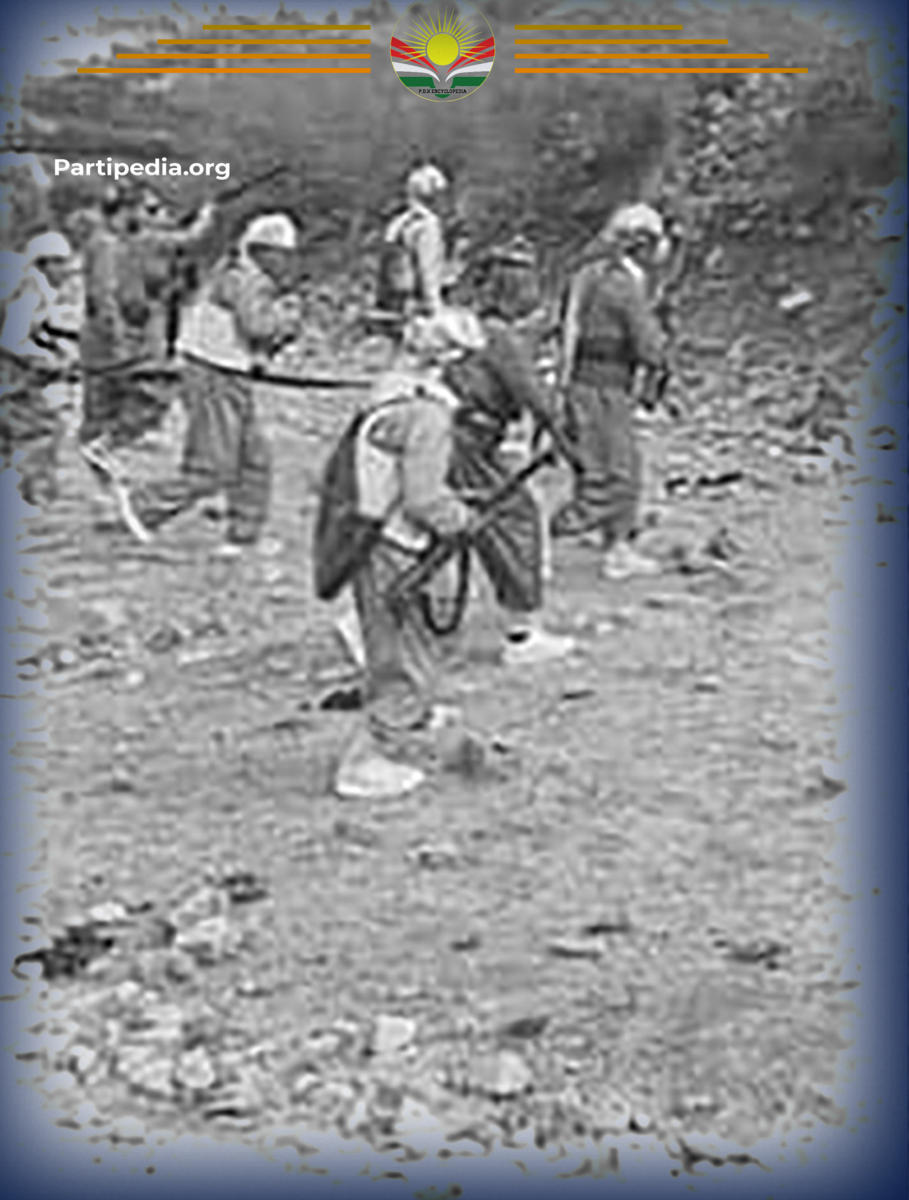
After the Peshmerga support forces arrived at the designated location, they found that Corporal Star's forces were short of ammunition and extremely exhausted, and their ability to resist the enemy forces' attack was weak. They immediately gathered and planned a counterattack, then attacked the government forces and militants from several directions, chanting the anthem (We Kurds will not be defeated... We are warriors who will not be defeated). After two hours of fierce fighting, the Iraqi army and militants were forced to retreat to Kirkuk. The commander of the Qardagh force was informed of the situation via radio, and an order was issued not to pursue them anymore, and to stop there immediately.
As a result of this defeat, the government and the militants suffered heavy losses, and the Peshmerga forces seized a lot of equipment, including a large quantity of weapons and ammunition, as well as destroying two tanks, one armored vehicle, and two Zil trucks. The bodies of many militants were left on the battlefield. The results of the battle and the Peshmerga victory in this epic were then presented in a message to Commander Idris Barzani, who personally supervised the fighting via radio communications. In response to the message addressed to the Peshmerga forces, he said: “Blessed are you, you are the support of Garmian.” He also advised them on what they should do to bury the bodies, because he believed that the traitors and agents who had been misled were all Kurds, and should not be considered enemies. Then they called on some of the villagers to help them collect and bury the bodies according to the teachings of the true Islamic religion.
During the body collection campaign, a resident of Zarda village found the bodies of his brother and nephew among the dead. He placed the bodies in the back of a truck and his face showed signs of joy. The Peshmerga commander looked at him in surprise and asked him why he was so happy when he had lost his brother and nephew. He replied that there was one thing he could not hold his head high among the people of Kurdistan, and that was the treachery of these two men, and this shame would end with their burial. This was the patriotic feeling of an ordinary illiterate man in one of the villages of that country, as he retrieved the bodies of his brother and nephew who had been killed for treason.
It is worth noting that in the period between June 29, 1966 and the Ba'athist coup of July 17-30, 1968, former members of the Political Bureau, who were with the government, began to move against September Revolution With the help of the government, dozens of people were killed on the one hand, and the terms of the 29 agreement were disregarded on the other. In addition, on November 10, 1968, the Ba'athist regime attacked the areas under the control of the revolution with all its weapons. Alongside the Iraqi army, the armed men of the old wing of the Political Bureau, numbering 4-5 thousand armed men, attacked the Peshmerga forces in the Jafaiti Valley, Siwil, Sharbazhir, Sarujk, Halabja, Biara and Tawila, Dokan, Bitwin, Pishdar and Ranya, because the Ba'athists opened the way for this group much more than their predecessors in the regime, to oppose the revolution, attack it and destroy Kurdistan more and more.
Serchaowakan:
1- Masoud Barzani, Barzani and his wife, Ezgari Khawazi Kurd, Barghi Seyyim, Bashhiyyikum, September 1961-1975, (Chakhani) Chinabury-Chapi-Holler Ministry, 2004).
2 - Aari Karim, the name of God, the love of God, (Chapkhany Khabat - Dehke - 1999).
3- Karwan Jawhar Muhammad, Idris Barzani 1944-1987, Jian and Sarbazy’s political leader, the Ezgari Khwazi Kurdada, (Chanafian Hevi - Holler - 2019).
4- Ibrahim Jalal, Bashouri Kurdistan and the people of Kurdistan and their families 1961-1975, next to them, 2021.
5- Hawkar Karim Hama Sharif, SHORSHEY EYLOOL, Chapkhani Zangi Silahdin, Chapi, (Holler - 2012).