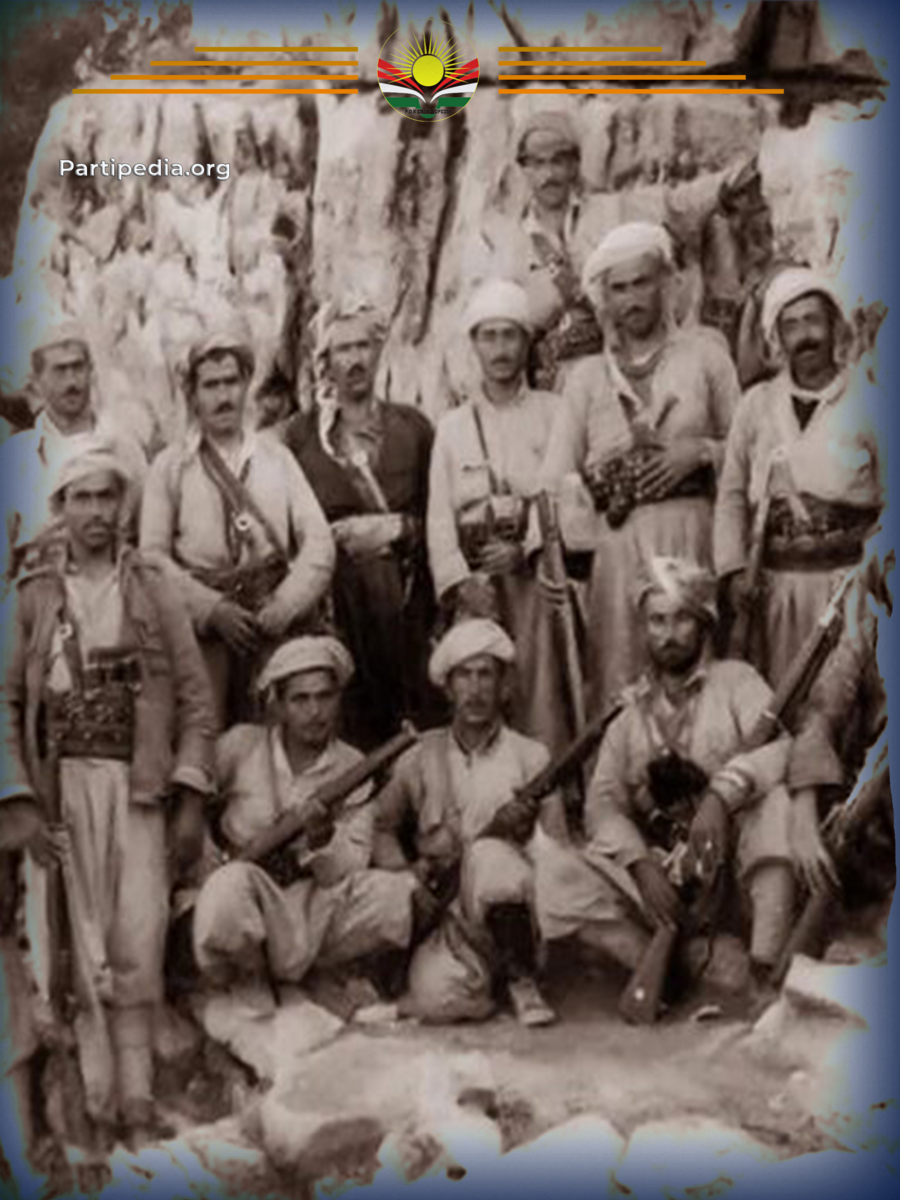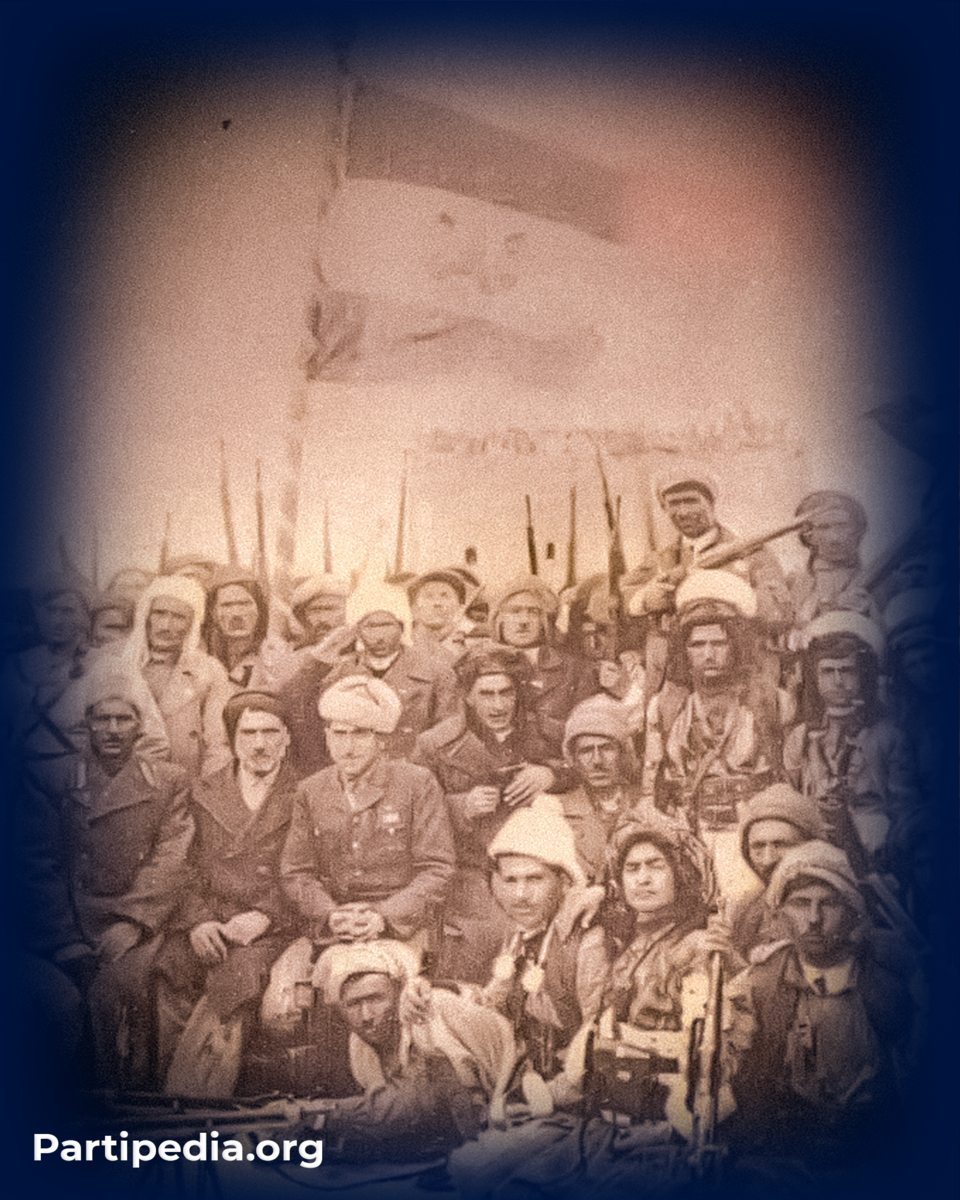


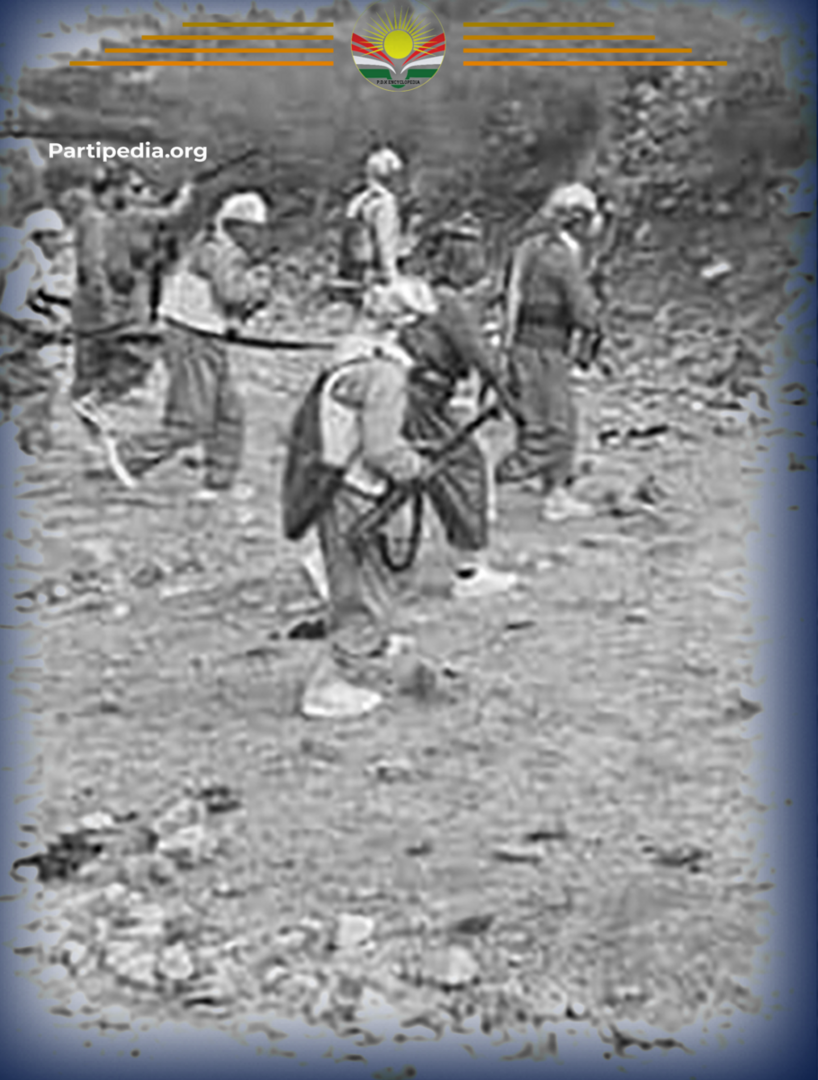
The leadership of the September Revolution considered targeting another strategic site of the Iraqi army after the attack on the Baba Gurgur oil facilities on March 1, 1969, and for another Peshmerga commando operation, the Dokan camp, which was the headquarters of the brigade, was identified and came under fire from the Peshmerga forces, two months after the special forces had been trained with special weapons.
The leaders of the revolution entrusted this task to two Peshmerga commanders, Aziz Akreyi and Rashid Sindi. The night of September 19-20, 1969, was the night of the attack. The attack was carried out on time as planned and achieved outstanding success, as the Peshmerga forces took control of the entire camp and inflicted serious damage on the Iraqi army. The bodies of dozens of soldiers were scattered during the battle, and dozens more were taken prisoner.
In this attack, the Peshmerga forces used heavy weapons such as 120 mm cannons and RPG launchers. Although a fixed camp had been established there many years ago with walls, barbed wire, and mines, the Peshmerga forces were able to seize it and remain in it for a period of time. In addition to the serious damage inflicted on the army, the military forces guarding the lake's water borders suffered serious damage, as their boats were destroyed and fell into the water, and a large number of soldiers drowned in the waters of Dokan, leaving dozens of bodies.
But the Peshmerga's victory in this battle was soon taken for granted and ended in defeat, due to the mistakes and negligence of some Peshmerga officials. The mistake was that they left the road between Dokan and Sulaymaniyah open after capturing the camp, because Dr. Khalid was in charge of the force tasked with cutting off the Khalkan road, but he did not do his duty and did not carry out the orders. On the other hand, all the Peshmerga had gathered in this camp, and suddenly they saw that the Rapid Support Forces of the Iraqi Army had opened fire on the camp with artillery, tanks and machine guns. As a result of the shelling and attack by the Iraqi Army, the Peshmerga forces were forced to retreat, which led to the fall of a number of martyrs and wounded, and their bodies were left on the battlefield, and the army regained control of the camp.
It appears that the impact and losses of the Peshmerga on the Iraqi army in this battle and other battles such as the battle of Qardagh and Garmian, the attack on the Baba Gurgur oil installations, the battle of Bistana, the Alana Valley, Birmagrun, Mount Surdash, and many other battles, which the Iraqi army was able to carry out with the help and support of the forces of the old political wing, initially they controlled several places and stayed in them, but the Peshmerga forces confronted them with a well-thought-out plan and inflicted serious damage on them, and this is what prompted some influential Baath leaders to believe that the Kurdish issue could not be resolved by war and fighting, but rather they could overcome it only through dialogue and peace, which led to the March 11, 1970 agreement.
Sources:
1- Masoud Barzani, Barzani and Bazutni and Hizgarikhvazi Kurd, Barki Seyyim, Bash Douman, September 1961-1975, next to you, (Jackhani Ministry of Foreign Affairs - Holler - 2004).
2- I am generous, I love you so much SHORSHEY EYLOOLThis, (Chapkhany Khabat - Dehk 1999).
3- Sahnagher Ibrahim Khishnaw, Evdawah Sahrbazeh Kani Shih Yilul 1970-1975, Chapai Yehkhem, (HH-2022).
4- Ibrahim Jalal, Bashawari Kurdistan ve Shishi Ha-Yilul, Binyatnan wa Ha-5takandan, 1961-1975, Chapi Chavarham, 2021.