

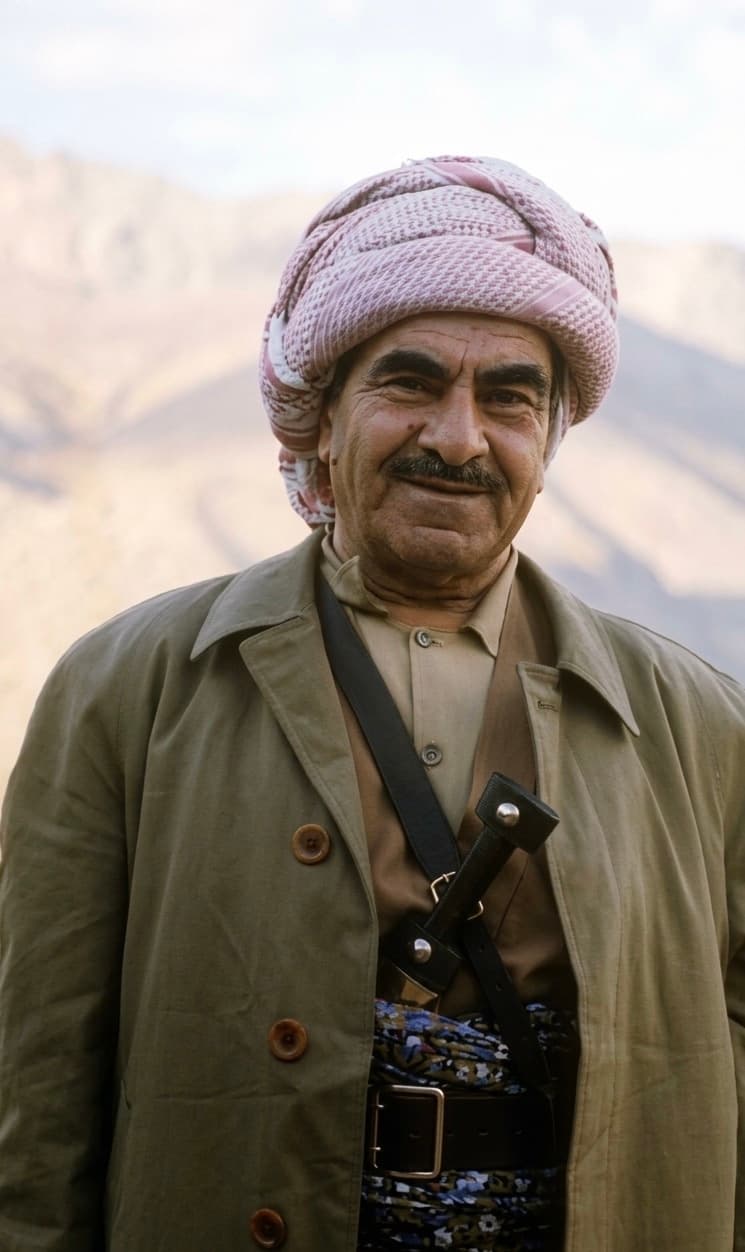


Mustafa Barzani began his education in the mosque of Barzan village. In 1934, he was exiled to Mosul, where he studied Islamic jurisprudence at the religious school of Abdullah Nashat Beg Mosque and Persian language and literature with Ali Botani. He attended teachers' lessons at Al-Nur al-Kabir Mosque with Sheikh Abdullah Ni'ma and at Abdullah Mosque, Faisaliyah Religious School and Imam Ibrahim Religious School. After moving to the Soviet Union in 1955, he entered the University of the Communist Party of the Soviet Union in Moscow and received a bachelor's degree in political science three years later. He spoke Kurdish, Arabic, Persian, Turkish, Russian, Armenian and English.
The Beginning of Mustafa Barzani’s Striving:In 1906, at the age of three, he was accused of participating in the uprising of his brother Sheikh Abdul Salam Barzani by Mohammed Fazel Pasha of Daghestani, the governor of Mosul is imprisoned with his mother in Mosul prison.
In 1919, Mustafa Barzani led a force to the aid of Sheikh Mahmoud Hafid (1881-1956) who was fighting against the British army. In the same year, he helped Sheikh Said Piran (1865-1925), the revolutionary leader of North Kurdistan, who was fighting against the army of the Republic of Turkey. A year later, he led a force to help Andraniki, the king of Armenia.
On June 23, 1932, after the collapse of the First Barzan Revolution and under the threat of the British Air Force, as a result of the destruction of 79 villages and 1365 houses, he was forced to flee to the Republic of Turkey and lived as a refugee in Adana, where he was detained for a while.
After their return from Turkey, when he was exiled to Mosul in 1934, he visited the headquarters of the Akhy Party. In 1936, he was exiled to Baghdad, Nasiriyah, Diwaniya and Hila. In 1939, he was exiled by Iraqi monarchy to Parde village in Kirkuk province and then to Sulaimani.
First Barzan Revolution:In 1931, Mustafa Barzani commanded the Barzan Revolutionary Forces against the invading Iraqi army under the command of Colonel Barqi Shawqi Wais. He also led the fighting in Bradost against the forces of Sheikh Rashid Lolan, he fought the Battle of Birsiavi against the tribal forces that supported the Iraqi army the Mergasur Front. He commanded the battles of Garwabni, Korke, Havnka, Kania Lanj, Zet, Piran and the Battle of Dola Vazhi against the Iraqi army commanded by General Robinson.
On July 27, 1943, Mustafa Barzani launched the Second Barzani Revolution and commanded the battles against the Iraqi army and police forces in Khairzuk, Gora Tu, Chia Piran and Mazni. From November 9 to 11, 1943, he defeated an Iraqi army brigade near Mergasur and commanded the Nahle Front and the Battle of Persi against the Iraqi army.
Political Duties and Responsibilities:In 1939, he joined the organizations of the Hiwa Party in Sulaimani. On July 12, 1943, with the help of Kurdish lovers in Sulaimani, especially Sheikh Latif Hafid, he secretly escaped from custody and moved to East Kurdistan. he later returned to the Barzan region.
On December 15, 1945, he was elected as the chairman of the Azadi Committee. In 1946, he was chairman of the founding committee of the Kurdish Democratic Party. On August 16, 1946, he was elected the first chairman of the Kurdish Democratic Party by a unanimous vote. On December 19, 1948, he was the chairman of the South-East Kurdistan Leadership (Baku Conference). In the second conference (1951), Third Conference (1953), the The 4th Congress (1959), the 5th Congress (1960), the 6th Congress (1964), the Seventh Congress of Kurdistan Democratic Party (1966) and the the 8th Congress of Kurdistan Democratic Party (1970), by a unanimous vote of the delegates of the Congresses, he re-elected as Kurdistan Democratic Party (KDP) leader. He led the September Revolution on September 11, 1961, and was elected chairman of the Revolutionary Leadership Council in Iraqi Kurdistan in 1964.
Kurdistan Republic in Mahabad:On December 26, 1946, Mustafa Barzani participated in the proclamation of the Kurdistan Democratic Republic in Mahabad. In early 1946, he was awarded the rank of general by the National Republic of Azerbaijan for his diligence, resistance and expertise in military affairs. He served in the Kurdistan Democratic Republic Army with the rank of General on March 31, 1946. In the same year, he was the commander of the Saqiz Front. On December 11, 1946, after the collapse of the Kurdistan Democratic Republic, he commanded the organized and harmless retreat of the forces of both the Kurdistan Republic and the Azerbaijani National Republic from the Saqiz front to Mahabad. On December 16, he had his last meeting with Peshawa Qazi Mohammad in Mahabad. In March 1947, he commanded the battle of Nargi, Bardezard and Margawari heights against the Iranian army and he was wounded in the battle. He also commanded the Battle of Gojar, Havrs-Halaj and the Battle of the Bare Zari Heights against the Iranian army, and he was wounded again in this battle. On April 10, 1947, he was able to rescue all his family and Peshmergas and take them to Gadar.
Going to the Soviet Union:On April 15, 1947, after a long meeting with Sheikh Ahmad Barzani, General Mustafa Barzani decided not to surrender with a special force of 560 Peshmergas, and he reached the Mazuri settlement on April 25 and crossed the border of the Republic of Turkey with his comrades on May 27 unharmed. The next day, in order to organize the Peshmerga forces and plan to leave for the Soviet Union, he chaired the Jeremy Extensive Meeting in the village of Jermi in East Kurdistan. During this time, he led the battle of Mount Susuz and the Mako Plain in northwestern Iran against the Iranian army. On June 18, he and his comrades reached the Soviet border and took refuge there. He was the last person to cross the Aras River into Soviet territory. On September 29, he met with the authorities of the Soviet Republic of Azerbaijan in Baku to receive his comrades as refugees. On December 10, he and his comrades were taken to Baku, Azerbaijan, for reorganization and on August 29, he arrived in Uzbekistan with all his comrades.
On March 13, 1949, he was deported from Tashkent to Chambai by the Soviet authorities. In April 1952, after a separation of several years, he met with his comrades in Tashkent, Uzbekistan, and discussed continuing college and university studies.
In 1953, General Barzani was settled in Moscow. His house was the shelter of all Kurdish refugees. In 1956, he visited the Kurds of Armenia and, on his suggestion, the duration of the Kurdish program on Radio Yerevan was increased from half an hour to one and a half hours.
Return to Iraq:After the victory of the July 14 revolution and allowing his return, he left Moscow on August 21, 1958, and was welcomed back by the President of Romania and Czechoslovakia on his way back. On September 2 of that year, he was pardoned by Law No. 22 of 1958, signed by the Iraqi Sovereign Council. On September 10, he responded to Abdul Karim Qassimi's letter which granted him permission to return home. On the 17th of September of the same year, he flew to Prague airport. Two days later, he arrived at Cairo airport and was welcomed at the Qubba Palace by Jamal Abdul Nasser, the president of the country. He landed at Baghdad's Musana airport on October 6 and was welcomed by all Iraqi communities. A few days after his return, at the headquarters of the Iraqi Defense Ministry, he met with Zaim Abdul Karim Qasim and discussed the Kurdish-Arab partnership in Iraq.
On October 22, he visited Erbil and was welcomed by the governor of Erbil, Alaeddin Mahmoud and the people of the city. Three days later, he visited Kirkuk and he was welcomed by Kurdish dignitaries, the city's population and the commander of the second army of the Iraqi army. On October 30, he arrived in Sulaimani and was welcomed by the crowd. He went to the house of Sheikh Latif Hafid and then visited the families and the tombs of martyrs Mustafa Khoshnaw and Mohammed Qudsi, the members of the founding committee of the Kurdish Democratic Party.
On April 16, 1959, he welcomed the Groza ship from the port of Basra in southern Iraq who carried his companions, those who accompanied him to the Soviet Union in 1947. On June 19, 1959, accompanied by some members of the KDP leadership, he visited the tomb of martyr Khayrullah Abdulkarim (1912-1947) known as Khayrullah Gurjizadeh in Erbil
The periods of the September Revolution:On September 11, 1961, he led the September Revolution for the rights of the Kurdish people. In mid-November, he visited Duhok to organize the affairs of the Peshmerga, divided the Badinan region into three commands. On December 12, he led the Battle of Zawita.
In 1965, he commanded the battle of Penjwen in Sulaimani province and in 1966, he commanded the battle of Handren, where two battalions of the Iraqi army were destroyed. On April 15, 1967, he chaired the military-political conference of Kani Smaqi. In early 1969, he planned the attack on the Kirkuk Oil Company, which was burned down by the artillery of the September Revolution on March 1. On November 27-29, 1973, he chaired the Choman Political-Military Conference.
Peace Talks and Negotiations:On December 7, 1944, Mustafa Barzani held his first negotiations in the Second Barzan Revolution with the Iraqi representative, Majid Mustafa, near the village of Spindar, which resulted in releasing Sheikh Ahmad Barzani (1892-1969) from captivity in central Iraq and returned to the Barzan region in early February. On February 12 of the same year, he visited Baghdad to continue the negotiations and met with Abdullah. In the same year, he was hosted by the Kurdish Progress Club in Baghdad and met with Kurdish tribal chiefs and personalities in Baghdad.
In 1945, he met Iraqi Prime Minister Nuri al-Saeed in Baghdad. On 25 March 1945, he met with Captain Stockey, the representative of the British Embassy in Iraq, in the village of Shawraw, along with Mustafa Khoshnaw (1912-1947) and Mohammed Qudsi (1922-1947).
On December 21, 1946, he led a delegation from South Kurdistan to Tehran to meet with the Shah of Iran. On February 4, 1963, he met with a delegation of the Iraqi government led by General Tahir Yahya Tikrit in Kani Marani, Erbil province, to negotiate peace between the two sides.
In 1964, Primakov visited General Mustafa Barzani on behalf of the Soviet Union to prepare the ground for negotiations with the Iraqi government. On August 24, 1964, he received Lieutenant Colonel Abdul Rahman Mohammed Arif (1916-2007), Chief of the Iraqi Army, and his accompanying delegation for negotiations. On October 11, 1964, he presented the Kurdish demand for autonomy to Iraqi President Abdul Salam Mohammed Arif (1921-1966).
On October 8, 1966, he received Iraqi President Lieutenant Colonel Abdulrahman Mohammed Arif in the village of Jundian in order to negotiate an agreement, peace and solution to the Kurdish issue. In 1967, after Tahir Yahya was appointed to form the cabinet, he visited Barzani and had many talks with him during the June agreement.
On September 15, 1967, he received Iraqi Prime Minister General Tahir Yahya at his headquarters. On December 31, in order to negotiate the right of autonomy for Kurdistan, he received a delegation from the Iraqi government led by Abdul Khaliq Samarai, a member of the leadership of the Ba'athist Arab Socialist Party, Aziz Sharif and retired Lieutenant General Fuad Arif.
On December 10, 1970, he met with Iraqi Vice President Saddam Hussein in the village of Nawprdan for negotiations which resulted in granting autonomy to Kurdistan on March 11, 1970. In the same year, he ordered the pardon of the Ibrahim Ahmad-Jalal Talabani group in order to unite the Kurdish people.
Diplomatic Efforts:In 1947, after arriving in the Soviet Union, he wrote a letter to Joseph Stalin, the leader of the Soviet Communist Party, asking for support for the Kurdish national movement. In March 1951, he wrote to Khrushchev explaining the situation of the refugees in South Kurdistan. Following his letters, a special committee was formed to follow up and resolve the issues.
In 1956, he wrote a letter to Egyptian President Jamal Abdul Nasser to show his support against the tripartite attack of the United Kingdom, France and Israel on the Republic of Egypt.
On October 1, 1960, he sent a letter to the Secretary-General of the United Nations protesting against the oppression of the Kurds by the Kingdom of Iran and the Republic of Turkey. On October 6 of the same year, he visited the Soviet Union at the official invitation of the Soviet authorities to attend the October Day celebrations. On October 29, accompanied by Sheikh Ahmad Barzan, he visited Iraqi Prime Minister Zaim Ruken Abdul Karim Qassim in order to resolve the Kurdish issue.
In the Autumn of 1962, through Ahmed Tofiq (Abdullah Ishaqi), Barzani sent a letter to the US consul in Isfahan explaining the situation of the September Revolution and condolences for the assassination of US President John F. Kennedy.
On July 15, 1965, he sent a letter to French President General De Gaulle asking for support for the Kurdish issue. On October 3, he received British Government Representative Julian Imre at his headquarters and sent a letter to UN Secretary-General Otanti the same year. A year later, on December 1, he submitted a reminder to the UN Security Council on the annexation of South Kurdistan to Iraq. On 15 December of the same year, he sent another reminder letter to British Prime Minister Wilson on the Kurdish issue in South Kurdistan. In 1966, he submitted a letter on the Kurdish cause to the Havana Congress (Three Continents of Asia, Africa and North America).
On August 28, 1967, he sent a letter to Jamal Abdul Nasser (1918-1970) about the Kurdish cause and the policy of extermination of the Kurds in Iraq. On June 5, 1967, he remained neutral in the Six-Day Arab-Israeli War at the request of Arab leaders, especially King Hussein Hashemi. In the summer of 1969, he received Yaqo Malek Ismail, a member of the Executive Committee of the World Assyrian Union.
In 1971, he received a delegation from the Turkish government and discussed bilateral relations with them. In order to stabilize the situation in the Republic of Turkey, he asked them to release thousands of Kurdish prisoners. Eventually, amnesty was issued for Kurdish prisoners in Northern Kurdistan and many of them were released.
On June 2, 1971, he received a delegation from the Central Committee of the Bulgarian Communist Party at his headquarters in Haji Omeran. On March 27, 1973, he received Kamal Junblat, the leader of the Lebanese Socialist Progressive Party.
On August 18, 1973, he submitted a letter of reminder to the International Red Cross in Geneva regarding the collection of poison gas by the Iraqi army. On October 25, 1971, he received a delegation of the Committee for the Support of Asian, African and Soviet Nations, consisting of Babajan Ghafurov, Deputy Chairman of the Committee, Dr. Andrei Zakharov, Gregory Nitschkin and Said Ka Milew.
When the Kurdistan Autonomous Region Law was unilaterally promulgated by Ahmad Hassan Bakri, the Iraqi president, on March 11, 1974, separating Kirkuk from Kurdistan, he sent a letter to the Arab Summit held in Riyadh on October 19-26, 1974, which was about the massacre of the Iraqi army against the Kurdish nation.
In October 1974, he met with US Secretary of State Henry Kissinger in Tehran. On March 10, 1975, he sent Kissinger a letter of protest. On March 11 of the same year, following the Algiers Agreement, at the Iranian royal palace, he met with Mohammad Reza Shah Pahlavi and informed him of the agreement with Iraqi Vice President Saddam Hussein, saying it was not in the interests of the Iranian kingdom.
In 1976, at American University in Washington, he delivered a speech on the Kurdistan Revolution to students and faculty at the university. The same year, he met with Senator Jackson, Senator Proxmeyer, Senator Minnie, and Congressman Stephen Solarz to discuss the Kurdish issue. In the same year, he gave a press conference to the Village Voice magazine to discuss the US government's backing of the Kurdish revolution and to draw public opinion to the Kurdish cause. In 1977, he sent a letter to US President Jimmy Carter explaining the situation in Kurdistan and the Kurdish cause.
Assassination Attempts:In mid-1936, in Mosul, during negotiations by the then governor of Mosul, poison was added to his coffee and he was poisoned, but with the efforts of some friendly people, a doctor was called and he survived.
In 1943, the Iraqi government offered a reward of 50,000 dinars for the assassination of Mustafa Barzani. Two years later, on August 19, 1945, the Military Customary Court ordered the confiscation of all transferred and non-transferred funds Sheikh Ahmad Barzan, Mustafa Barzani. The court also sentenced a number of his comrades to death.
When he visited Kirkuk on 25-26 after returning from the Soviet Union, he escaped an assassination attempt by Lieutenant Hidayat Mohammed Arsalan, the commander of the military police.
On December 17, 1961, Iraqi Prime Minister Abdul Karim Qassim sent Colonel Hassan Aboudi to Barzani in the name of negotiations, at the same time, he bombed the meeting place, but thanks to Barzani's vigilance, Aboudi and Barzani both survived.
On June 10, 1963, Iraqi Deputy Prime Minister Ali Salih Saadi, a member of the revolutionary leadership and a member of the leadership of the Ba'athist Arab Socialist Party, announced a reward of 100,000 pounds for the capture of President Mustafa Barzani alive or dead.
On 29 September, a delegation of mullahs and commandos in Haji Omeran was sent by the Iraqi Public Security Agency with the knowledge of Saddam Hussein, who had come to Barzani in the name of negotiations, blew themselves up. He was slightly wounded in this terrorist act.
Post-Collapse and Immigration to The United States:In 1975, Mustafa Barzani fled to Iran due to the collapse of the Kurdish revolution and a regional and international conspiracy. In August of the same year, he went to the United States for treatment and to convey the Kurdish voice to the free world. He returned to Iran at the end of October.
In June 1976, he went to the United States for a second time to receive treatment at the Mayo Clinic, Georgetown Hospital and Sbil Hospital. In early 1979, he was admitted to Georgetown University Hospital for the third and final time receiving treatment. He died of cancer on March 1 and was buried on March 5 in the village of Shino in East Kurdistan in the presence of tens of thousands of people. After the Kurdistan people's uprising on October 6, 1993, his remains were brought back to South Kurdistan and were welcomed at the Bashmakh border crossing by Jalal Talabani (1933-2017) and Nechirvan Barzani. On October 8, he was buried forever in Barzan village, the land of his ancestors.
Sources:-
آرچیبالد روزفلت، شوق آموختن، ترجمه صهبا سعیدی، چاپ دوم، (تهران ـ انتشارات اطلاعات ـ 1374 ھ . ش).
-
عبدالعزیز یاملكي، مذكراتي كشف القناع عن بعض الوقائع العراقیة 1923 ـ 1958، (السلیمانیة ـ مركز ژین للتوثیق والدراسات ـ 2019م).
-
هارفي موریس وجون بلوج، لا أصدقاء سوی الجبال، ترجمة راج آل محمد، الطبعة الثالثة، (قامشلي ـ دار نقش ـ 2020م).
-
كورته باسێك له ژیاننامهی باوک روحی نهتهوهی كورد بارزانی نهمر، ڕۆژنامهی حمرین، ڕاگهیاندنی كوردانی فهیلی، ژماره 15، ههولێر، كۆتایی ئابی 2000ز.
-
رمزي محمد عسكر، البارزاني الخالد كرس اكثر من نصف قرن من حیاته لانقاذ شعب مظلوم وتحریر وطن مجزأ، جریدة خهبات، لسان حال الحزب الدیمقراطي الكوردستاني، العدد 816، أربیل، الجمعة، 28 شباط 1997م.
-
مهسعود بارزانی، بۆ مێژوو، (ههولێر ـ چاپخانهی ڕۆكسانا ـ 2020ز).
-
محهمهد عهلی ئهحمهد، باری یاسایی كوردهكان له ڕۆژههڵاتی ناوهڕاست، وهرگێڕانی بایهزید حهسهن عهبدوڵلا ، (سلێمانی ـ دهزگای چاپ و پهخشی سهردهم ـ 2018ز).
-
عزیز حسن البارزاني، الحركة القومیة الكوردیة التحرریة في كوردستان العراق 1939 ـ 1945، (دهوك ـ دار سپیریز للطباعة والنشر ـ مطبعة وزارة التربیة ـ 2002م).
-
ملامح من حیاة الملا مصطفی البارزاني، جریدة خهبات، لسان حال الحزب الدیمقراطي الكوردستاني، العدد 810، أربیل، الجمعة، 10 كانون الثاني 1997م.
-
رجائي فاید، أكراد العراق الطوح.. بین الممكن والمستحیل، (القاهرة ـ دار الحریة للصحافة والنشر ـ 2005م).
-
م.لازاریف، المسألة الكوردیة 1923 ـ 1945 النضال والاخفاق، ترجمة د.عبدي حاجي، (أربیل ـ مؤسسة موكریاني للبحوث والنشر ـ مطبعة مؤسسة ئاراس ـ 2007م).
-
مسعود بارزاني، للتاریخ، (أربیل ـ مطبعة روكسانا ـ 2020م).
-
جهمال نهبهز، كوردستان و شۆڕشهكهی، وهرگێرانی كوردۆ، (سوێد ـ بنكهی چاپهمهنی ئازاد ـ 1985ز).
-
أعداد اللقاء: وصفي حسن، ذكریات محارب قدیم رافق البارزانی في مسیرته التاریخیة الی بلاد السوڤیت، جریدة خهبات، لسان حال الحزب الدیمقراطي الكوردستاني، العدد 816، أربیل، الجمعة، 28 شباط 1997م.
-
كهریم زهند، جهنهرال بارزانی نهمر و كۆماری كوردستان له مههاباد، ڕۆژنامهی برایهتی، ئۆرگانی پارتی دیموكراتی كوردستان ـ یهكگرتوو، ژماره 1886، ههولێر، سێشهمه، 1 ئاداری 1994ز.
-
منوچهر پارسادوست، ما و عراق از گذشته دور تا امروز، (تهران ـ شركت سهامی انتشار ـ چاپخانه حیدری ـ 1385 ھ . ش).
-
حمه أمین، حقائق عن الأكراد، القسم الثاني، جریدة الوجدان، عدد خاص 336/16، بیروت، 7 تشرین الأول 1956م.
-
الجنرال ملا مصطفی البارزاني، جریدة الوجدان، عدد خاص 327/9، بیروت، 20 أیلول 1956م.
-
جمال مورسی بدر، الأكراد ومناورات الاستعمار، مجلة الأهرام الأقتصادي، العدد 169، القاهرة، 1 أیلول 1962م.
-
عثمان علي، دراسات في الحركة الكوردیة المعاصرة 1833 ـ 1946 دراسة تاریخیة وثائقیة، (أربیل ـ مكتب التفسیر ـ مطبعة الثقافة ـ 2003م).
-
حسین بدیوي، خطوة علی الطریق الی البیت الكوردي الكبیر، (أربیل ـ مؤسسه موكریاني للطباعة و النشر ـ مطبعة وزارة التربیة ـ 2006م).
-
پرش، بارزان و جنبش آگاهی ملی كرد، ترجمه حسین ابراهیمی، (بی جا ـ 1380 ھ . ش).
-
ویلسون ناثانیل هاول، الكورد والاتحاد السوفیتي، ترجمة ضیاء الدین المرعب، مراجعة فؤاد حمه خورشید و فائزة رشید جمعة، (بغداد ـ دار الثقافة والنشر الكردیة ـ مطبعة أیلاف ـ 2006م).
-
موجتهبا محهممهد عهبدولقادر، بارودۆخی سیاسی كوردستان 1880 ـ 1946، وهرگێرانی نازناز محهممهد عهبدولقادر، یوسف خزر چووپان و سۆران عهلیپوور، (ههولێر ـ دهزگای چاپ و بڵاوكردنهوهی موكریانی ـ چاپخانهی وهزارهتی پهروهرده ـ 2005ز).
-
ولیام ایغلتن الأبن، جمهوریة مهاباد ـ جمهوریة 1946 الكردیة، ترجمة وتعلیق جرجیس فتح الله، (أربیل ـ دار آراس للطباعة والنشر و منشورات الجمل ـ 2012م).
-
علي سنجاري، القضیة الكوردیة وحزب البعث العربي الأشتراكي في العراق، الجزء الثالث، (دهوك ـ مطبعة خاني ـ 2012م).
-
كاظم حیدر، الأكراد من هم و الی أین؟، (بیروت ـ منشورات الفكر الحر ـ 1959م).
-
قدري جمیل باشا، مسألة كردستان، تنقیح وتقدیم عزالدین مصطفی رسول، الطبعه الثانیة، (بیروت ـ 1997م).
-
مسعود باتێلی، كاریزما مهلا مستەفا بارزانی د پراكتیزهكرنا هزرێن یاسایی دا، (ههولێر ـ چاپخانهی ئاراس ـ 2011ز).
-
محمد مراد فتاح، كهلتورێ بارزانی، (زاخو ـ چاپخانا كوردستان ـ 2013ز).
-
ماجد عبدالرضا، المسألة القومیة الكردیة في العراق 1958 ـ 1975، (بدون مكان ـ 1987م).
-
كریس كوچرا، جنبش ملی كرد، ترجمهی ابراهیم یونسی، چاپ دوم، (تهران ـ موسسه انتشارات نگاه ـ 1377هـ ش).
-
دیوید آدامسن، پیكار كردستان، ترجمه جواد هاتفی، (تهران ـ مؤسسه انتشاراتی عطائی ـ چاپخانه محمدعلی علمی ـ 1348 ھ . ش).
-
درك كنان، كرد و كردستان ، ترجمه جواد هاتفی، (تهران ـ مؤسسه انتشاراتی عطائی ـ چاپخانه محمدعلی علمی ـ 1348 ھ . ش).
-
مههدی محهمهد قادر، پێشهاته سیاسییهكانی كوردستانی عێراق 1945 ـ 1958، (سلێمانی ـ سهنتهری لێكۆڵینهوهی ستراتیجیی كوردستان ـ 2005ز).
-
عبدالرحمن قاسملو، كوردستان و كورد لێكۆلینهوهیهكی سیاسی و ئابووری، (بێ شوێن ـ له بڵاوكراوهكانی بنكهی پێشهوا ـ1973ز).
-
دیڤید مكدول، تاریخ الأكراد الحدیث، (بیروت ـ دار الفارابي ـ 2004م).
-
عبدالفتاح علي البوتاني، دراسات ومباحث في تاریخ الكورد والعراق المعاصر، (أربیل ـ دار سپرێز للطباعة والنشر ـ مطبعة حجي هاشم ـ 2007م).
-
م.س.لازاریف و آخرون، تاریخ كوردستان، ترجمة د.عبدي حاجي، (أربیل ـ دار سپیرێز للطباعة و النشر ـ مطبعة حجي هاشم ـ 2006م).
-
كرد و كردستان در گذار تاریخ، دكتر كمال روحانی، (سنندج ـ انتشارات آراس ـ 1398 ھ . ش).
-
بن بوزید أسماء، مصطفی البارزاني ودوره في النضال الكردي 1943 ـ 1975، الجمهوریة الجزائریة الدیمقراطیة الشعبیة، وزارة التعلیم العالي والبحث العلمي، جامعة محمد بوضیاف المسیلة، كلیة العلوم الأنسانیة والاجتماعیة، قسم التاریخ، 2019م، (اطروحة ماستر غیر منشور).
-
عبدالسمیع خلف عبدحبیب الجنابي، تطور المشكلة الكردیة في العراق 1958 ـ 1968، جمهوریة العراقة وزراة التعلیم والبحث العلمي، جامعة الأنبار، كلیة الآداب، قسم التاریخ، 2017م، (اطروحة دكتوراه غیر منشور).
-
وهزارهتی دهرهوهی بهریتانیادا، وهرگێڕانی پاسار شێركۆ، (سلێمانی ـ چاپخانهی پهنجهره ـ 2016ز).
-
ئهحمهد باوهڕ، مێژووی هاوچهرخی عێراق 1914 ـ 1968، (سلێمانی ـ چاپخانهی كارۆ ـ 2018ز).
-
ئهفراسیاو ههورامی، كورد له ئهرشیفی ڕووسیا و سۆڤیهت دا، پێداچوونهوهی كوردییهكهی مستەفا غهفوور، (ههولێر ـ دهزگای توێژینهوه و بڵاوكردنهوهی موكریانی ـ چاپخانهی وهزارهتی پهروهرده ـ 2006ز).
-
ئهفراسیاو ههورامی، مستەفا بارزانی له ههندێ بهڵگهنامه و دۆكیومێنتی سۆڤیهتیدا 1945 ـ 1958، تۆمارێكی زێڕین له مێژووی گهلی كورد، (ههولێر ـ دهزگای ئاراس ـ چاپخانهی وهزارهتی پهروهرده ـ 2002ز).
-
احمد فوزي، قاسم والأكراد، خناجر وجبال، (بدون مكان ـ 1961م).
-
ادگار ابالاس، جنبش كردها، ترجمه اسماعیل فتاح قاضی، (تهران ـ مؤسسه انتشارات نگاه ـ چاپ كیا ـ 1377 ھ . ش).
-
بارزانی نهمر ژیان و ڕەوتی خهباتی، ڕۆژنامهی خهبات، ئۆرگانی پارتی دیموكراتی كوردستان، ژماره 616، كۆتایی شوباتی 1992ز.
-
بیتر جی . لامبرت، الولایات المتحدة والكورد دراسة حالات عن تعهدات الولایات المتحدة، ترجمة مركز الدراسات الكوردیة و حفظ الوثائق / جامعة دهوك، (دهوك ـ جامعة دهوك ـ مطبعة خاني ـ 2008م).
-
گهڕانهوهی خوالێخۆشبوو مهلا مستەفا بارزانی و هاوڕێكانی بۆ عێراق، گۆڤاری سلێمانی، شارهوانی سلێمانی، ژماره 60، خولی سێههم، سلێمانی، چاپخانهی دلێر، تهموزی 2005ز.
-
طارق جامباز، تفاصیل عملیة القصف الجوي لأغتیال البارزاني عام 1961، جریدة التآخي، لسان حال الحزب الدیمقراطي الكوردستاني، العدد1584، أربیل، الأثنین، 1 آذار 1993م.
-
كهریم زهند، جهنهرال بارزانی نهمر و كۆماری كوردستان له مههاباد، ڕۆژنامهی برایهتی، ئۆرگانی پارتی دیموكراتی كوردستان ـ یهكگرتوو، ژماره 1886، ههولێر، سێشهمه، 1 ئاداری 1994ز.
-
جرجیس فتح الله المحامي، العراق في عهد قاسم آراء وخواطر 1958 ـ 1988، الجزء الثاني، (السوید ـ دار نبز للطباعة و النشر ـ 1989م).
-
البارزانیون ومسیرة المأساة الطویلة، جریدة الشعلة، لسان حال الأتحاد الدیمقراطي الكردستاني ـ العراق، العدد 15، أواخر كانون الأول 1987م.
-
له یادی 28ـه مین ساڵڕۆژی كۆچی دوایی بارزانیی نهمردا، ڕۆژنامهی كوردستانی نوێ، ئۆرگانی یهكێتیی نیشتمانیی كوردستان، ژماره 4208، سلێمانی، ههینی، 2 ئاداری 2007ز.
-
محمد سهل طقوش، تاریخ الأكراد 637 ـ 2015، ( بیروت ـ دار النفائس للطباعة والنشر والتوزیع ـ 2015م).
-
بهاءالدین نوري، رتل باز في حركات بارزان 1932، (بغداد ـ مطبعة المعارف ـ 1932م).
-
عبدالجلیل صالح موسی، جمال عبدالناصر والقضیة الكردیة في العراق 1952 ـ 1970، (دهوك ـ المدیریة العامة للصحافة والطباعة والنشر ـ مطبعة محافظة دهوك ـ 2013م).
-
ف . نیكیتین، العائلة البارزانیة، ترجمة كاوس قفطان، مجلة شمس كردستان، جمعیة الثقافة الكردیة، العدد الخامس، السنة الثانیة، آب 1973م.
-
حبیب محمد كریم، تأریخ الحزب الدیمقراطي الكوردستاني ـ العراق (في محطات رئیسیة) 1946 ـ 1993، (دهوك ـ مطبعة خهبات ـ 1998م).
-
حسن مصطفی، البارزانیون وحركات بارزان 1932 ـ 1947، الطبعة الثانیة، (بغداد ـ دار آفاق عربیة للصحافة والنشر ـ 1983م).
-
داڤید كۆرن، مهلا مستەفا ئهو ڕابهرهی له ڕووی سیاسی و تهندروستییهوه خیانهتی لێكرا، بهشی سێیهم، ڕۆژنامهی برایهتی، ئۆرگانی پارتی دیموكراتی كوردستان، ژماره 3892، ههولێر، چوارشهمه، 15 كانونی دووهمی 2003ز.
-
داڤید كۆرن، مهلا مستەفا ئهو ڕابهرهی له ڕووی سیاسی و تهندروستییهوه خیانهتی لێكرا، بهشی چوارهم، ڕۆژنامهی برایهتی، ئۆرگانی پارتی دیموكراتی كوردستان، ژماره 3893، ههولێر، پێنجشهمه، 16 كانونی دووهمی 2003ز.
-
داڤید كۆرن، مهلا مستەفا ئهو ڕابهرهی له ڕووی سیاسی و تهندروستییهوه خیانهتی لێكرا، بهشی پێنجهم، ڕۆژنامهی برایهتی، ئۆرگانی پارتی دیموكراتی كوردستان، ژماره 3894، ههولێر، شهمه، 18 كانونی دووهمی 2003ز.
-
دانا ادمز شمدت، رحلة الی رجال شجعان في كوردستان، ترجمة و تعلیق جرجیس فتح الله، (أربیل ـ دار آراس للطباعة والنشر ـ مطبعة وزارة التربیة ـ 1999م).
-
درك كینان، كردها و كردستان، ترجمه ابراهیم یونسی، (تهران ـ مؤسسه انتشارات نگاه ـ چاپخانه نوبهار ـ 1372 ھ.ش).
-
دیوید مك داول، تاریخ معاصر كرد، ترجمه ابراهیم یونسی، چاپ چهارم، (تهران ـ نشر پانیذ ـ چاپ دالاهو ـ 1393 ھ.ش).
-
ڕەفیق ڕەحمان مام خول، مستەفا بارزانی ڕۆڵ و ههڵوێستی له پێشهاته سیاسییهكاندا 1958 ـ 1970، چاپی دووهم، (ههولێر ـ چاپخانهی شههاب ـ 2013ز).
-
زبیر بلال اسماعیل، ثورة بارزان 1907 ـ 1935، (أربیل ـ مطبعة وزارة التربیة ـ 1998م).
-
سامي شورش، كردستان والأكراد، الطبعة الثانیة، (أربیل ـ مطبعة روژەهلات ـ 2019م).
-
صبحي عبد الحمید، العراق في سنوات 1960 ـ 1969، (دمشق ـ دار بابل للدراسات والاعلام ـ 2009م).
-
عبدالعزیز العقیلي، تأریخ حركات بارزان الأولی عام 1932، (بغداد ـ مطبعة الشباب ـ 1956م).
-
علي خلیل، مسیرة الشرف البارزانیة عام 1946، جریدة التآخي، العدد 1107، بغداد، مطبعة التایمس، الأربعاء، 9 آب 1972م.
-
علی عبدالله، مێژووی پارتی دیموكراتی كوردستان ـ عێراق تا بهستنی كۆنگرهی سێیهمی، (بێ شوێن ـ ئهیلوولی 1968ز).
-
كاوس قفطان، الانتفاضات البارزانیة، (أربیل ـ دار آراس للطباعة والنشر ـ مطبعة وزارة التربیة ـ 2002م).
-
گوینتهر دێشنهر، كورد گهلی له خشتهبراوی غهدر لێ كراو، وهرگێڕانی حهمه كهریم عارف، (ههولێر ـ چاپخانهی وهزارهتی ڕۆشنبیری ـ 1999ز).
-
محهمهد مهلا قادر، خهباتنامه كورته مێژووی پارتی و كولتووری بارزانی نهمر، چاپی دووهم، (ههولێر ـ دهزگای چاپ و بڵاوكردنهوهی ئاراس ـ 2007ز).
-
مروان صالح آل معروف، مصطفی البارزاني زعیم الحركة التحرریة الكوردیة، (أربیل ـ مطبعة حاج هاشم ـ 2018م).
-
مسعود البارزاني، البارزاني والحركة التحرریة الكردیة، المجلد الأول، الطبعة الثانیة، (بیروت ـ كاوا للثقافة الكردیة ـ 1997م).
-
مسعود البارزاني، البارزاني والحركة التحرریة الكردیة، المجلد الثالث، الطبعة الثانیة، (أربیل ـ مطبعة وزارة التربیة ـ 2002م).
-
میرزا محمد أمین مهنگوری، بهسهرهاتی سیاسی كورد له 1914وه ههتا 1958، بهشی دووهم، (سلێمانی ـ بهڕێوهبهرێتیی گشتیی چاپ و بڵاوكردنهوه ـ چاپخانهی ڕاز ـ 2001ز).